1,457 words
Time of writing: Tuesday, July 28th, 2026
Note: The long-form review of the Nodus Obscura II will be available here when it is published.
Introduction:
It is incredibly hard to carve out a niche for oneself in an industry that has been around for centuries, and especially one that has experienced repeated crises. Yet a small brand from California managed to do this through two avenues. First, they knew their customer base well. From the very beginning, the founders of Nodus fostered a strong community of enthusiasts who genuinely had the company’s best interests in mind. Some of them would go on to work for Nodus as the company gained momentum and grew. Second, Nodus correctly identified the shifts in global manufacturing and positioned itself to be at the tip of the spear when it came to the use of materials and technology. Recently, Nodus released the Sector Deep Damascus and the TrailTrekker Carbon, which fuse carbon fibre with SuperLuminova.
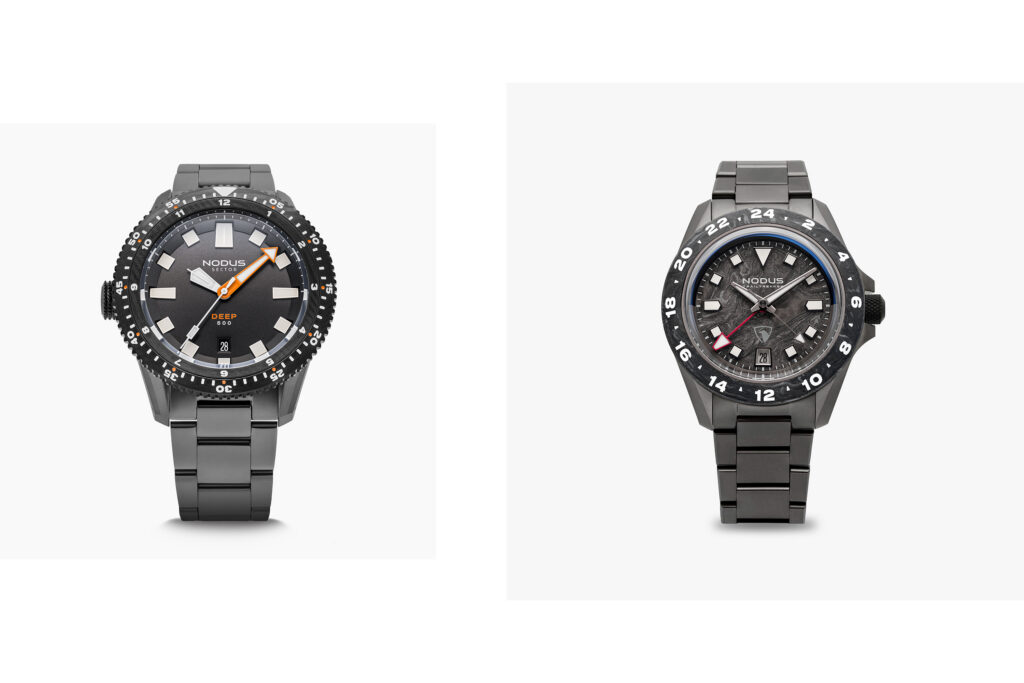
The Nodus Sector Deep Damascus and TrailTrekker Carbon
– Photographs kindly provided by Nodus
Though it is easy to get lost in the second aspect of what makes Nodus special, one has to dig back into their work with their communities to truly get a sense of how Nodus endures in the hearts of many. For many years now, Nodus has partnered with those in various industries, including their own, such as the brand Raven on the aforementioned TrailTrekker, to make special watches through their Design Lab division. These watches may leverage current models in their lineup, such as the collaboration with a site I used to write for, The WatchClicker, or, in the case of The Smoking Tire podcast, with the Canyon, create an entirely new chassis and source a movement that is new to the brand.
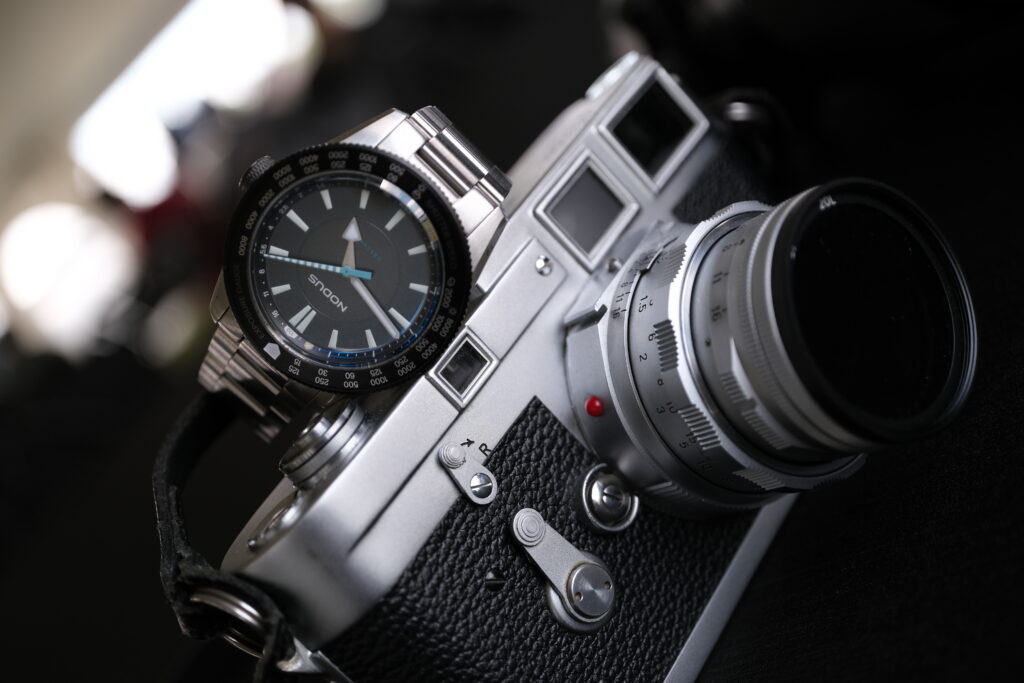
The hobbyist photographer community and the watch enthusiast community overlap significantly. With these amateur photographers photographing what had brought them joy over the years, they spread the word of Nodus watches and their other interests through social media. Often at horology trade shows and enthusiast gatherings, there are a few people there also talking about their cameras.
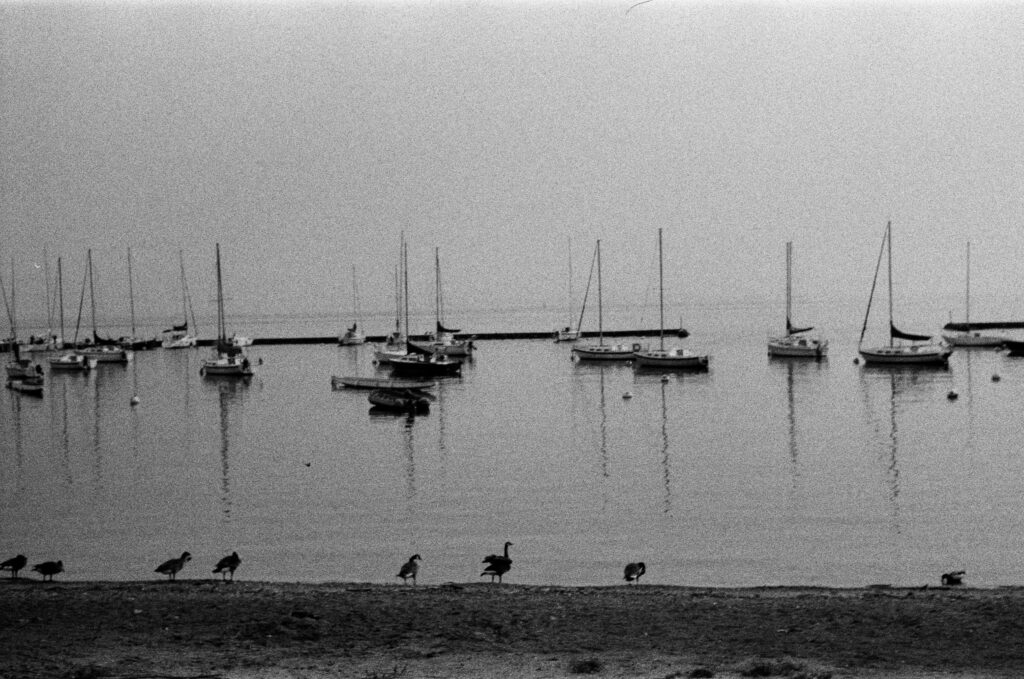
Geese having no choice but to remain outdoors during Toronto’s worst day in terms of air quality, thanks to wildfires in Northern Ontario.
Photograph made with Kodak TMAX P3200 at ISO 800 with a 3-stop ND filter and the Leica 50 Summicron Dual Range.
So, their collaboration with Beers and Cameras with the first generation of the Obscura simply made sense. Beers and Cameras is a popular enthusiast group that organizes events and gatherings focused on photography, often while breaking bread and having a drink or two. The same model has worked in other fields of interest as well, such as watch collectors meeting at RedBar events, and several stationery groups meeting with the same goals in mind. Photographers love analogue and mechanical tools, and the pairing of a watch which aids them in their photographic endeavours was an instant success.
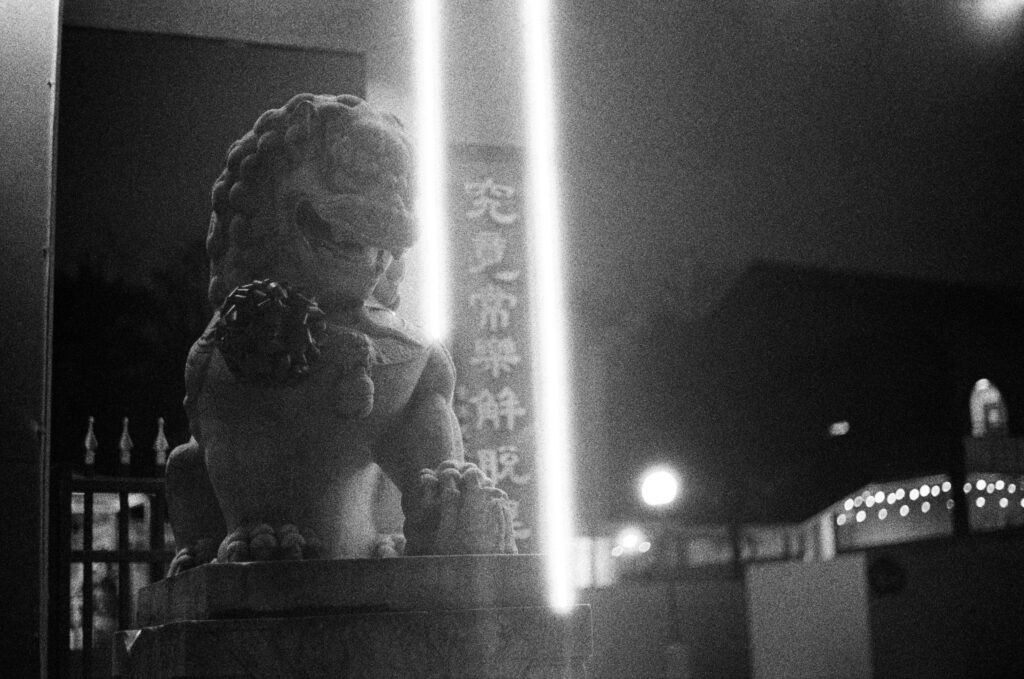
Buddhist temple shot with Kodak TMAX P3200 at ISO 800 with a Leica 50 Summilux Version 2
The Experience:
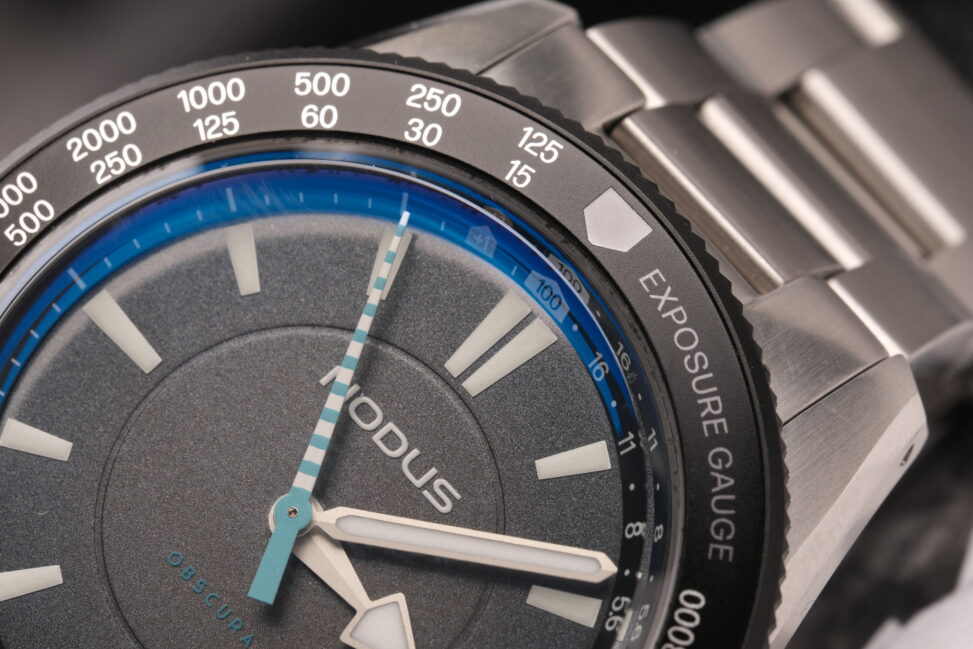
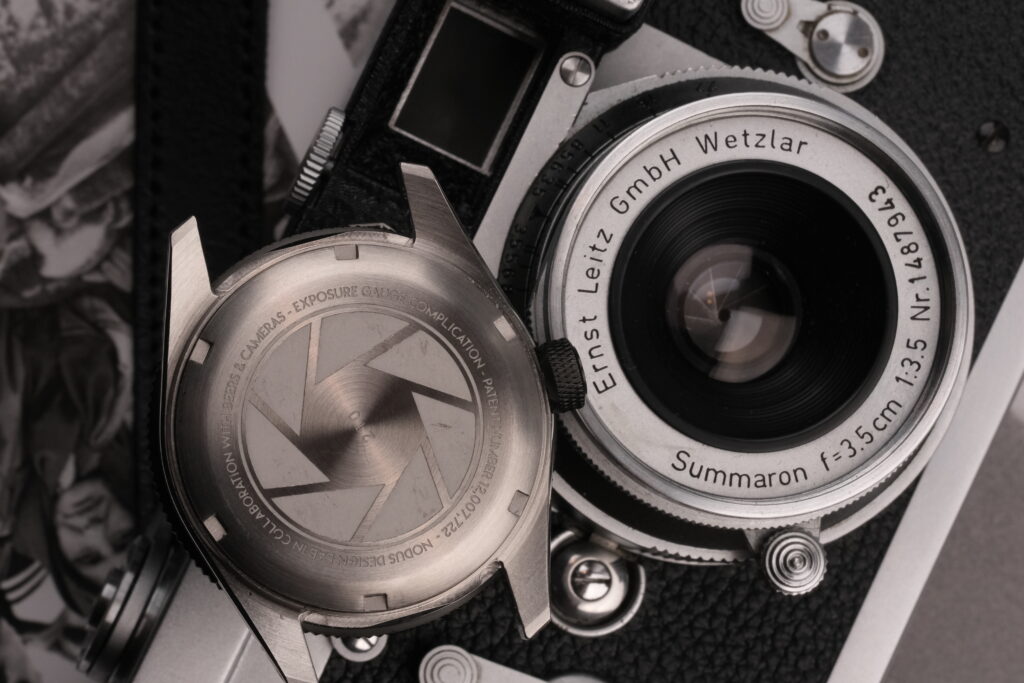
Nodus was the first watch brand to use the patented Sunny-16 scale, which utilizes the bezel and outer chapter ring to help beginner photographers expose their composition while using a camera without a light meter outdoors during the daylight hours. Beers and Cameras founder Juan Martinez patented this utility patent, and the result as seen here with the Nodus Obscura II, is a true celebration of photography.
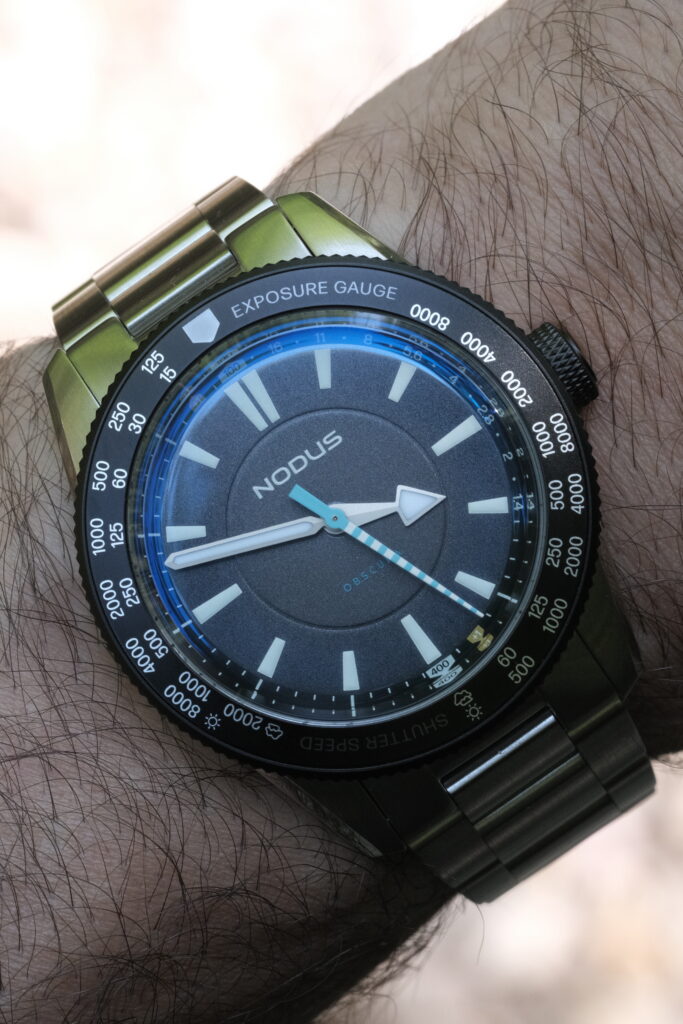
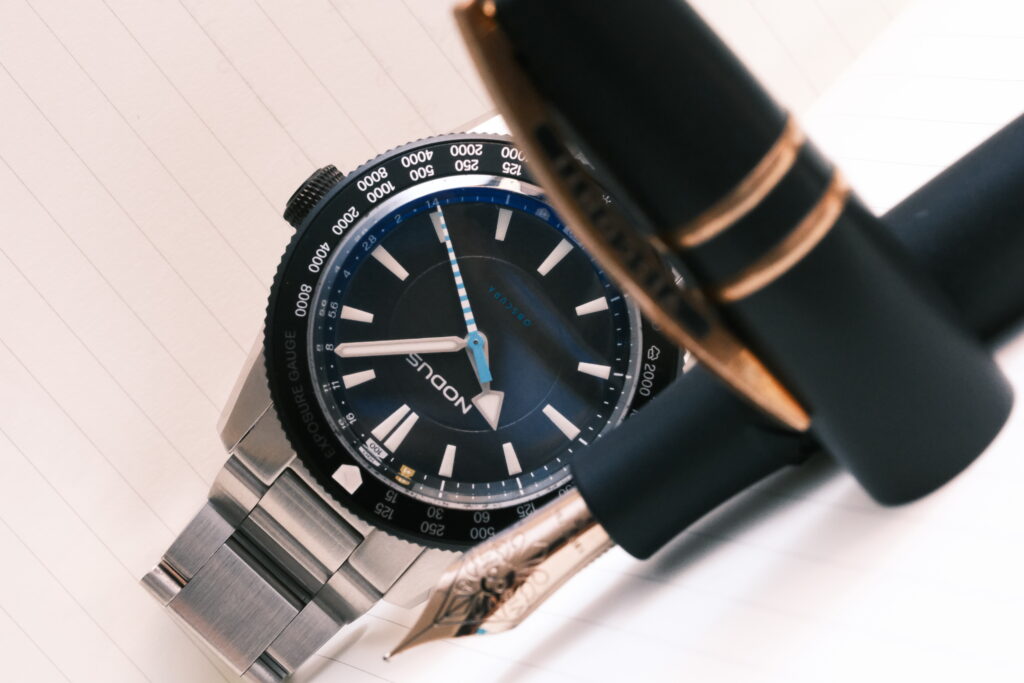
The complication is quite intuitive to use if you are familiar with the exposure triangle of ISO, shutter speed, and aperture. The outer chapter ring illustrates the aperture settings from F 1.4 to 16, either at ISO 100 or 400. The bezel, which moves bi-directionally from 12-4, shows the user their shutter speed depending on whether the conditions are overcast or clear with direct sunlight. In practice, film photographers will gain the ability to expose for a scene simply through putting in the work as the thousands of hours and rolls of film go by. This bezel is for enthusiasts who, due to their workload or the cost of film, can only shoot occasionally and would thus benefit from the shorthand this complication offers.
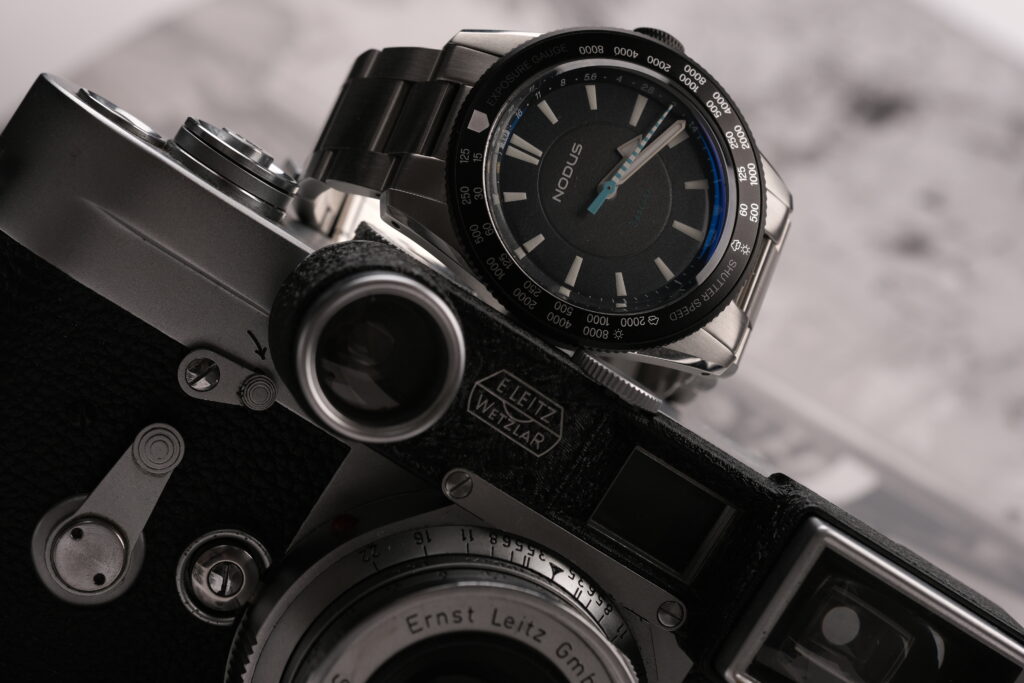
Having the Obscura II on one’s wrist allows the photographer to escape and not have to look at an exposure application on their phone or use an external light meter. The Obscura II helps those who use photography as a means of escape and a retreat from their daily concerns.

Photograph made with Lomography Red Scale XR at ISO 120 with the Leica 50 Summilux ASPH Version 2
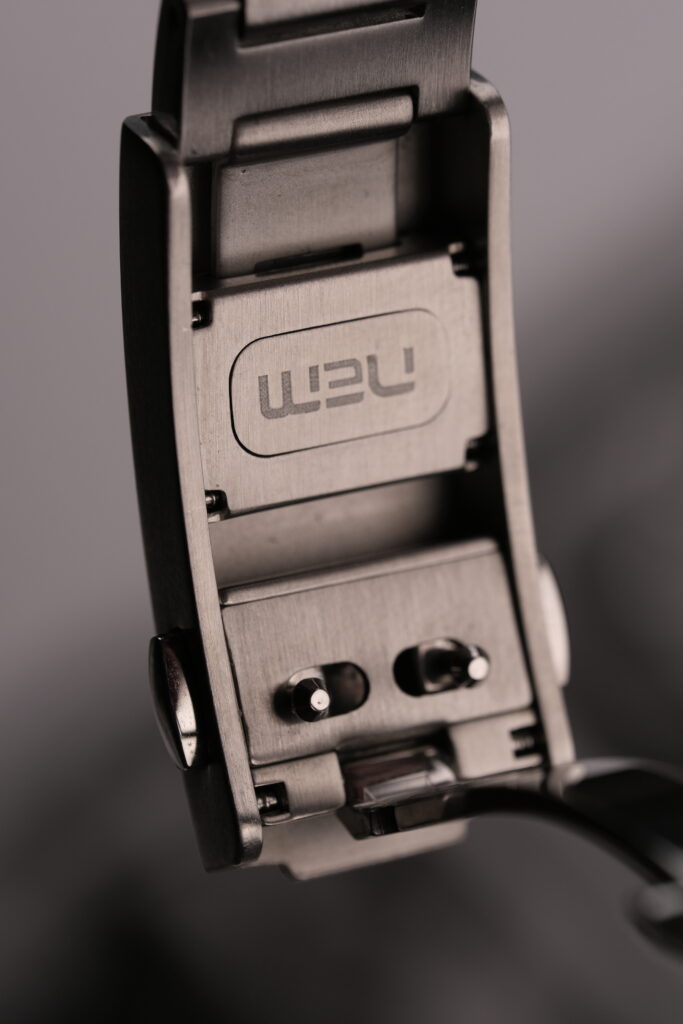
It also helps that the Obscura is incredibly comfortable to wear. Its slim 38mm case never gets in the way and is perfectly counterbalanced by the latest generation of Nodus’ extension clasp. Nodus undertook making their own clasp during the pandemic, when most other brands were scrambling to make ends meet. A half-decade later, this clasp is truly industry-leading in reliability, strength, and quality of engagement, thanks to its dual-trigger outer buttons and inner button, which allow micro-adjustment without tools.
Because of its bezel, the watch does register to the eyes of onlookers as a sports watch, and the DLC finish only goes further to cement this impression. The classical design elements of the hands and conservative lugs do elevate this watch to where it would not be out of place in a suit-and-tie setting either. Interestingly, during my time with the Obscura II, not a single person enquired about the watch. This watch flies under the radar, and that is always a good thing.

Fuzzy out-of-focus portrait of Matt Smith-Johnson shot with Kodak TMAX P3200 at ISO 1600 with the Leica 50 Summicron Dual Range
The Outer Design Elements:
Earlier, we briefly touched on Nodus using materials that are not always conventional. With the Obscura II, we get a direct window into their methodology and see how mindful the approach and philosophy of the folks behind Nodus and Mr. Martinez actually are.
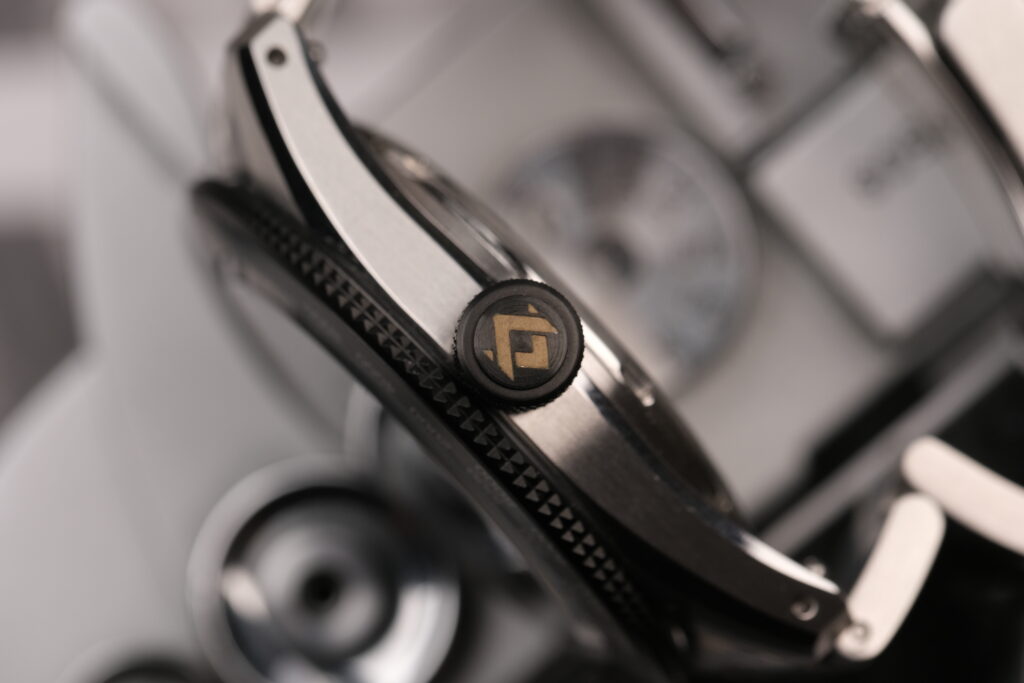
As the decades pass, some cameras go through a patination process known as “brassing.” This occurs as paint on the camera body naturally rubs off, exposing the brass underneath. Certain models that exhibit this form of patina are considered quite desirable by many collectors, and Leica, still to this day, releases a “Black Paint” version of nearly every camera they release. The wear of the camera tells the photographer, and others, the journey that the camera has gone through. Cameras are storytelling devices, and Nodus tapped into this by using a DLC finish on the bezel and crown that is meant to wear away over time as well. Unlike the brass cameras, Nodus used bronze here with the Obscura due to brass potentially being too soft for the bezel’s click-spring mechanism.
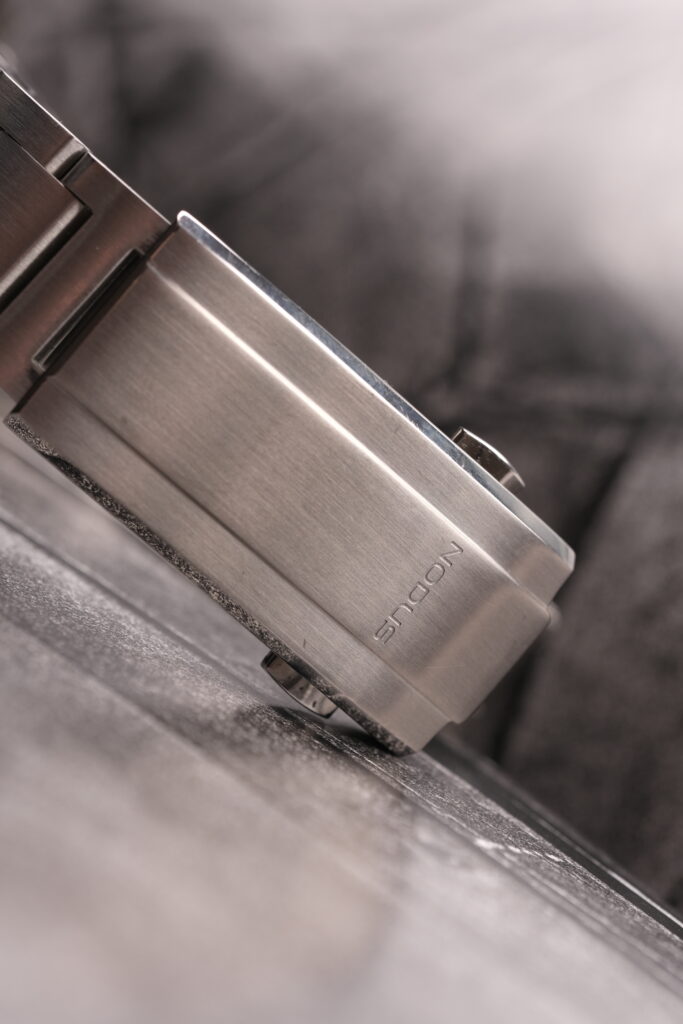
Once on the wrist, the overall character of the Obscura when one is not looking at it is of a secure heft. The watch never feels top-heavy, thanks to that gorgeous clasp, and the Seiko NH38 quietly goes about its work. One never gets the impression that this is an automatic watch from the unsprung weight of a rotor. The finishing of the 316L steel case and bracelet is brushed, save for the transitions from the sides of the case to the top, which are polished.
The Inner Design Elements:
The brushed outer elements perfectly match the gorgeous grey fumé dial that is meant to resemble film grain. Out in the field, this dial is soothing to look at, and the anti-reflective coating on the sapphire crystal ensures this dial changes its character in the various settings you venture through. The dial can be mistaken as black when not in direct light, and it can shift from a cool light blue to a warm chocolate depending on how warm the lighting is.
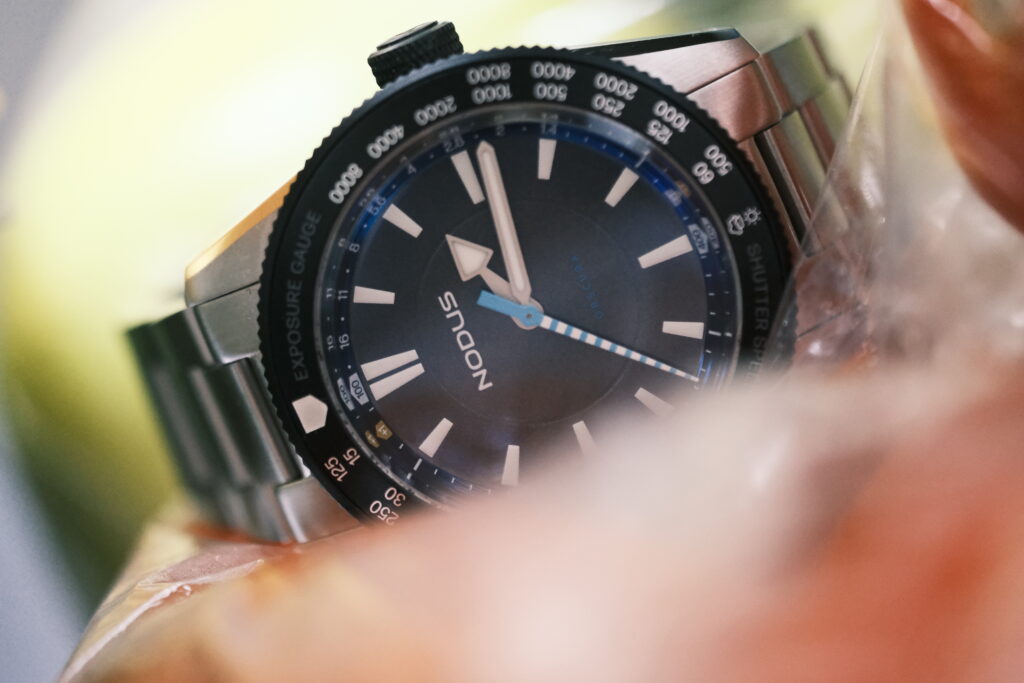
Given that Nodus makes some of the most effective tool watches on the market, the Obscura’s legibility is spectacular. The BGW9 SuperLuminova is more than enough, though it would have been a cute touch to extend the lume application to the white portion of the pale-blue-striped seconds hand. That would have given the Obscura some visual interest when the sun goes down, but such a lume application is not easy, nor would it necessarily be worth the effort either.
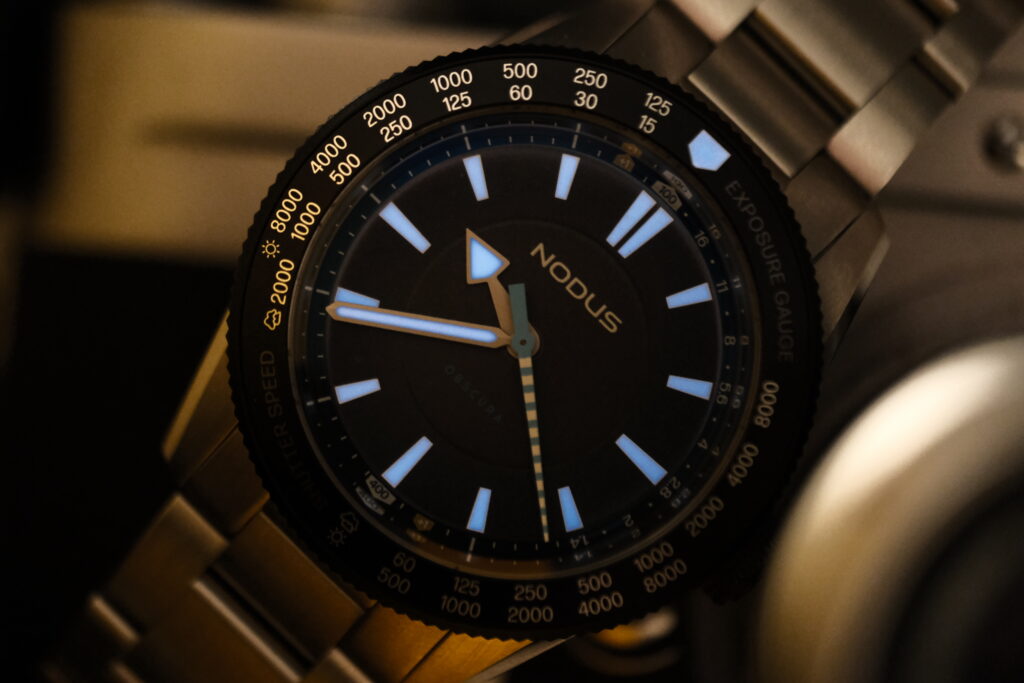
My only complaint about the Obscura is that it lacks a date window. Professional and enthusiast photographers alike write down the date ranges of the film being used on the canister. They also write additional information, such as whether the film will be pushed or pulled, or the sequence in which the roll of film falls within a specific project. This is especially helpful for hobbyists who may take a few months to finish a single roll of film. Given that the act of photography is usually one of escape for amateurs, not having to check one’s phone for the date and accidentally seeing all of the silenced notifications that they are trying to ignore would be appreciated.

Mustangs chase one another down the Bayview extension. Photographed with Fuji Velvia 50 and the Leica 50 Summilux ASPH Version 2
Conclusion:
The Nodus Obscura II is a gorgeous watch that is also a beautiful celebration of photography. The quality of the timepiece screams heirloom quality, and the use of the Seiko NH38 movement and the bronze bezel and crown speaks to the intentions of this watch being enjoyed for decades to come. I would have appreciated this watch many years ago as I was getting started on my photography journey, and if you are someone who wants to celebrate your love for photography at all times, camera in hand or not, the Nodus Obscura is your perfect timepiece and companion.
Specifications:
Case: 316L stainless steel
Case Width: 38mm
Case Width with Bezel: 40mm
Thickness: 11.7mm
Lug-to-Lug: 47mm
Lug Width: 20-16mm
Bracelet: 20-16mm with the Nodus Extension Module with quick-release spring springbars
Water Resistance: 100m
Lume: BGW9 Grade A Super LumiNova
Crystal: Sapphire with anti-reflective coating on both sides
Bezel: bi-directional Al5 bronze with black DLC coating
Weight on bracelet sized for a 6.85” wrist: 135 grams
Price: $650 USD
You can purchase your very own Nodus Obscura in both the stainless steel and PVD finish here.