4,870 words
Time of writing:
Note: the short form review of the Nodus Obscura II can be found here.
No matter what anyone tells you, the wristwatch is an incredibly personal device and accessory, and as important as it ever was. Beyond ensuring one is on time, its design and ornamentation tell others something about the owner, and it can be worn at all times. Depending on the demands and responsibilities placed on one’s life, a watch can quickly become an unknowingly indispensable part of one’s life. Fortunate are those who claim that they do not need to wear a watch, for they either lead a life of leisure, one of diminished responsibility, or one where a sense of urgency and timing incidents is just not in their lives. The rest of us, however, who rely on these tools for work or life circumstances, quickly find that they become much more than just a piece of jewelry.
Thus, over the last century, it became commonplace to add complications and features to watches that suited professions, as these members of society typically only took off their watches to sleep, wash their hands or shower. Watches designed for engineers focused on being anti-magnetic. Watches for race car drivers had chronographs. Watches for pilots are complete with several scales and navigational complications. Doctors’ watches featured a pulsometer scale, either with or without a chronograph. Finally, the popular dive watch came to have increased water resistance and a rotating bezel for elapsed time. Meanwhile, everyone else wore a time-only timepiece, or anything that they liked. Watches were an integral part of everyone’s lives, and still are today, regardless of the imprudent person next to you claims. You can read my article where I interviewed many professionals and asked whether they used their tool watches in the workplace here. What made the dive watch and the chronograph popular amongst the masses was their general use case. Whether timing how long the lasagna has left in the oven, or being mindful of how long you are away from other people at a party as you take a moment for yourself on the backyard deck, the general civilian use cases for the simple tool watch that can measure an event are immense.
Given our attachment to a watch, if worn frequently, it makes sense for varying professionals and hobbyists to seek out a timepiece that caters to their needs while telling everyone in the room something about them as well. So, a couple of years ago, when Wesley Kwok, co-founder of Nodus, approached me for my feedback about a photographer’s watch, I was not surprised. I was also not sold on the idea however.
In this article, there will be four topics covered, all surrounding what the second-generation Nodus Obscura offers. First, the reasons why photography is such an attractive hobby for many, especially busy professionals, will be explored, and why the Obscura is a perfect watch for them. Second, we will look at the general use and practicality of all bezels and scales on watches, with references to previous works and my own detailed experiences. Third, we will take a look at the watch itself and how it performs as a watch with the goal of aiding photographers. Lastly, we will look at the global climate as of the time of writing this article, summer of 2026, and how the degrading economic climate impacts both enthusiasts and professionals working in the fields that this watch complication aims to serve.
On Why the Nodus Obscura is a Beautiful Instrument for Those Who Love Photography
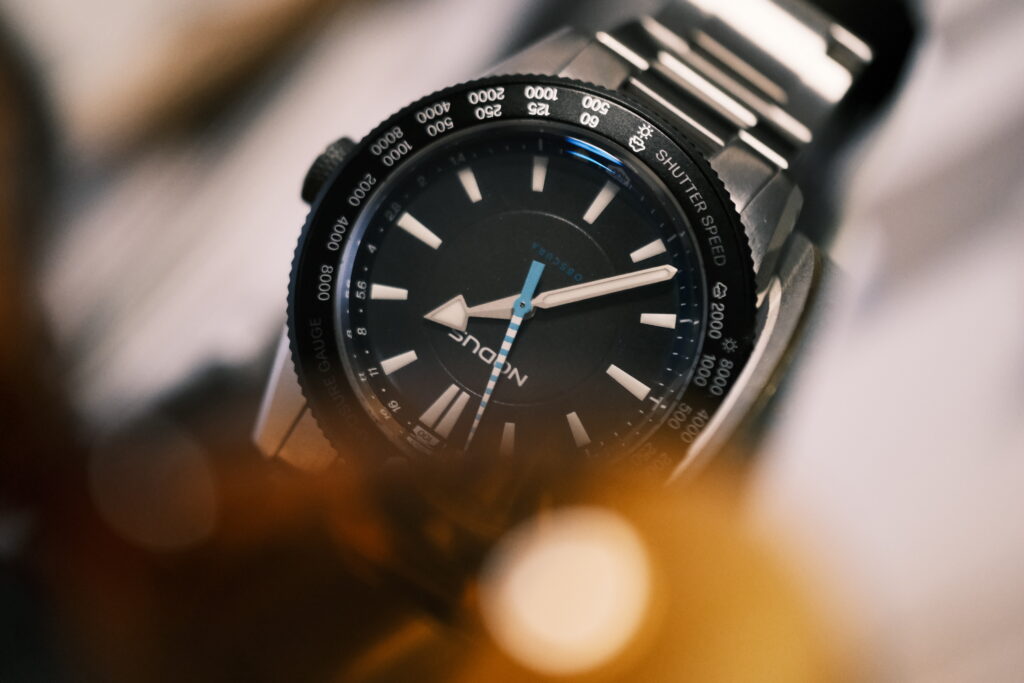
Before we get started, there is one important fact that needs to be stated – the Nodus Obscura II is a perfect timepiece. It is perfect in terms of manufacturing, fit and finish, typeface proportions, design, and especially usage of materials. This is not an easy feat. Most watches that even reach six figures usually have an aspect about their design that looks horribly disfigured once one sees it and cannot unsee it afterwards. This timepiece, from every point of interaction, whether from your fingers, hands, arms, and eyes, is perfect. This is why, if you are a photography enthusiast, I wholeheartedly recommend this watch for you. It will bring immense joy to your life, just like your love for photography.
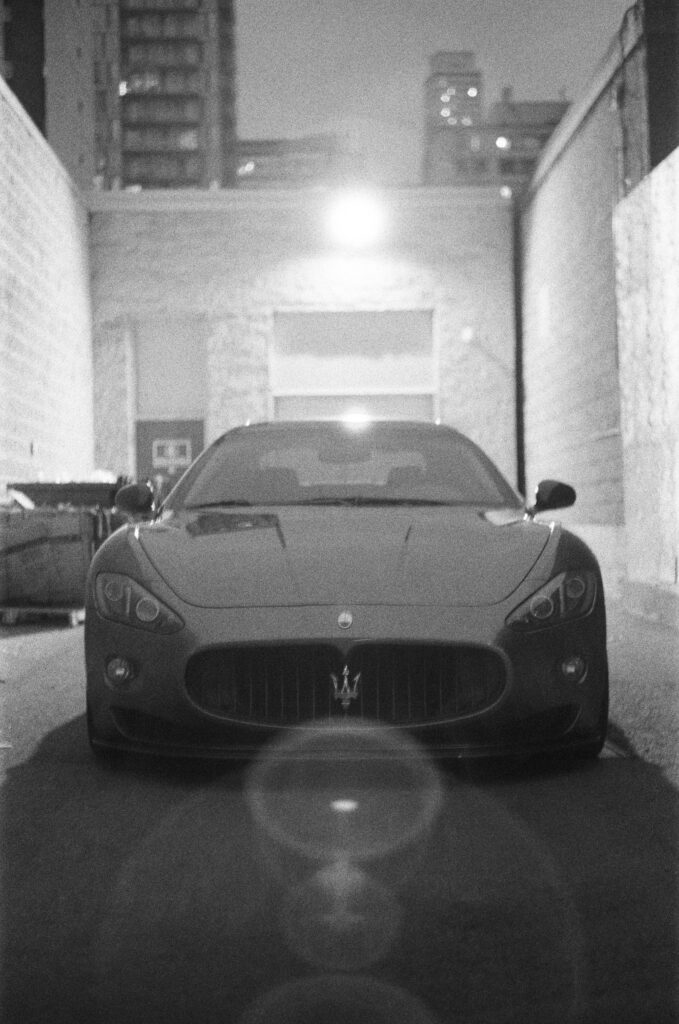
Leveraging the optical signature of the 50 Summicron Dual Range, paired with Kodak TMAX P3200 shot at ISO 800.
There is a very good reason that photography is one of the most dominant activities amongst all demographics. It offers the population an accessible avenue towards creative ventures, especially now that nearly every mobile phone has an excellent camera and editing software. To make photographs, one does not need to take art classes, practice colour science and brush techniques with various types of paint, nor do they need to practice an instrument or tool to be proficient enough not to embarrass themselves. All they need to do, in most cases, is point the lens at the subject and capture the image.

A lazy Sunday morning on Queen Street in Toronto. Image made with Portra 160 and the Leica 50 Summilux V2.
Over the years, I have had hundreds of people come to me and ask about which camera they should get if they want to upgrade their photos. In almost all the cases, they simply resort back to using their camera phone, for their phone is always with them and never an undue burden. On occasion, however, one person buys the camera, slowly integrates it into their life. Even more rarely, a couple of years down the road, they buy an old film camera.
“I just want something more than what my phone and (digital) Sony are giving me,” said a woman in her mid-twenties last fall as we stood in line for a stationery show, when I asked her why she was interested in shooting film. She was embarrassed at first, but when we went over her photographs on her Instagram account, I was fully confident that she would make wonderful images and art with whatever was put in her hands.
These individuals then tend to carry the camera body and their favourite focal length with them on walks, to dinner, and even to work. Pretty soon their families and friends start relying on them for photos. Some even start earning an income from their photographs.
Working professionals tend to find their way into a particular brand/ecosystem and start amassing lenses, bodies, and accessories to help their passion for photography grow as their skill sets expand. Event photographers take up product, sports, and bird photography to keep their passion alive in their spare time. Photography becomes not only a way of providing for your family, but it also becomes one’s sole escape from their concerns. The real power behind photography is that it allows one to escape their immediate concerns while also becoming more immersed in their setting and the precise moment that they are in.

Image made with Porta 800 and the Leica 50 Summilux ASPH V2.
This is where the common interests that centre around tactile experiences, especially ones that involve interactive mechanisms that include gears, come into play. For instance, I have yet come across a photography enthusiast who is also not interested in watches. Yet I have come into contact with plenty of professional photographers who could care less about watches, cars, pens, and other hobbies.
For these reasons, many hard-working professionals tend to gravitate towards photography as their main hobby. Photography is at once an escape, yet a very direct way of documenting what is happening every single day. This unfortunately creates stigma, such as luxury camera brands being synonymous with the rich, whether through their profession or inherited wealth. But for those who use these tools, whether as an escape from reality or to make a living, the Nodus Obscura is an extremely compelling companion for someone who adores photography.
The Obscura allows the enthusiastic consumer to meld two interests into one, and more importantly, at all times the ability to carry with them a reminder of what brings them joy in life. Afterall, what hobbies such as photography which result in an image or product, gives enthusiasts an experience that exists on a much higher plane than say, playing video games. They can look upon their efforts over the years, and not only take pride in their growth, but also be reminded of all the moments they captured. Thus, when one looks down at their Nodus Obscura, they are reminded of all the quality time spent during their free time through the act of engaging with their environment through a camera.
It also helps that the Obscura is a beautifully manufactured timepiece, and I go into great detail on the design and how the watch wears in the short-form review of this watch here. What the remainder of this article covers is a more serious look into whether such timepieces actually have any value for those who are strictly productivity-driven. As a result, many enthusiasts may read the following passages as negative, but in reality, the words below are simply not concerning them. However, before moving along any further, we will now address enthusiasts or those who are considering film photography for the first time.
The Fundamentals of Exposure
In order to make sense of whether this watch is right for you or others, you have to have a basic grasp of the three fundamentals behind making an image with a camera. This is called the exposure triangle, and it consists of three factors which directly have an impact on one another.
The first is the ISO, which is how light sensitive the film or camera sensor is. The lower the ISO number, the less light sensitive it is, making it perform poorer in darker conditions. The consequences of reaching higher ISOs is that in film there will typically be more film grain, less detail retention, and the same is true for digital camera sensors. With digital cameras, the sensor will start introducing “noise” which creates artifacts and there will be a loss of detail in sharpness, colour, and range as a result.
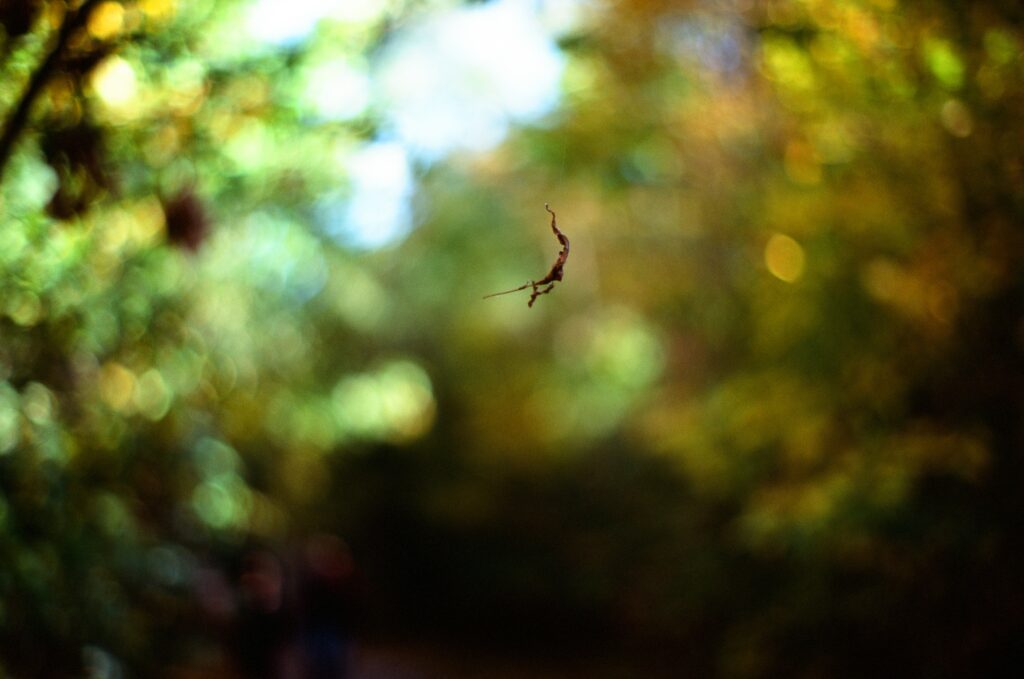
An example of a vintage lens with a fast aperture. Image made with Fuji Velvia 50 and a vintage Leica 90 Summicron.
The second consideration is the aperture of the lens. You may read or hear others talk about how “fast” a lens is. The “faster” or “brighter” the lens is, the more light it will be able to capture. The simplest analogy for aperture is to compare a lens to your eyes. The darker it gets, the larger your pupils become to gather more light. The same is true with lenses. The brighter the lens, the greater its capacity to open up and let in more light. Lenses for photography have their apertures measured in F-Stops. Lenses for cinema applications are measured in T-Stops. The lower the F-Stop, the brighter the lens is. Manufacturing brighter lenses that perform well is harder to do, and thus more expensive. On top of being able to shoot in darker environments with greater ease and thus having a smaller impact on the other factors within the exposure triangle, brighter apertures allow for a shallower depth of field. Depth of field refers to how large the area in focus is, and is usually what drives people towards a stand-alone camera. Sensor and film stock size also impact the depth of field, and since everyone now starts on a cell phone camera which has a tiny sensor, they want more depth of field. This can cause consumers and enthusiasts to obsess over this one feature while overlooking all of the other factors in making a good image. I have seen the pursuit of creamy out of focus backgrounds and characterful lenses become all encompassing, and it is always a shame to see this.
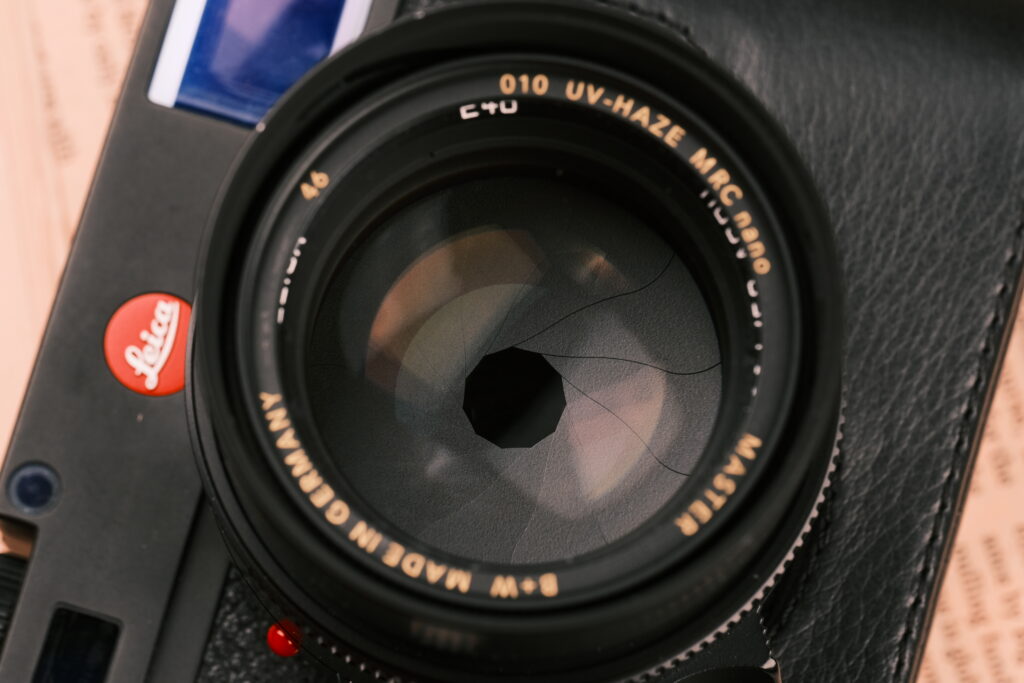
Pictured here is the aperture of this lens being partially closed.
Lastly, we have the shutter speed. This is self-explanatory, for the longer the camera’s shutter is open, the more light it lets in. Modern digital cameras have much faster mechanical shutter speeds than older film cameras, and they also use electronic shutters, which raises the shutter speeds even higher. There are consequences to higher shutter speeds with digital cameras that most centre around the sensor readout speed and any moving elements looking warped as a result. Technology advancements in electronic shutters have meant that some high-end professional cameras have been released without a mechanical shutter.
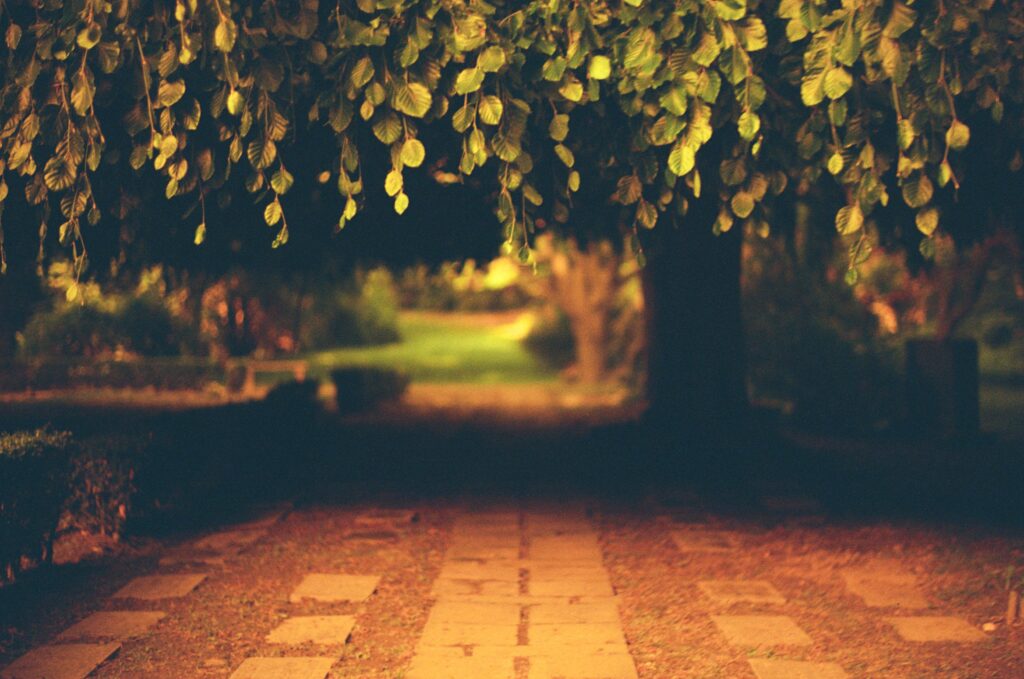
Photograph made with Lomography RedScale at ISO 120 with the Leica 50 Summilux ASPH V2.
Sunny-16 Complication on the Obscura
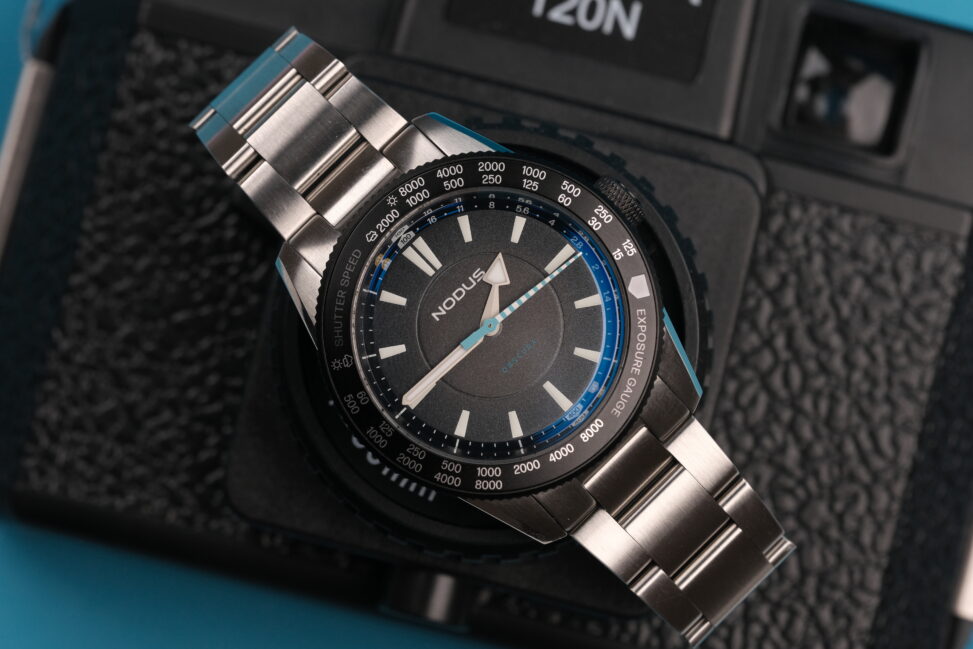
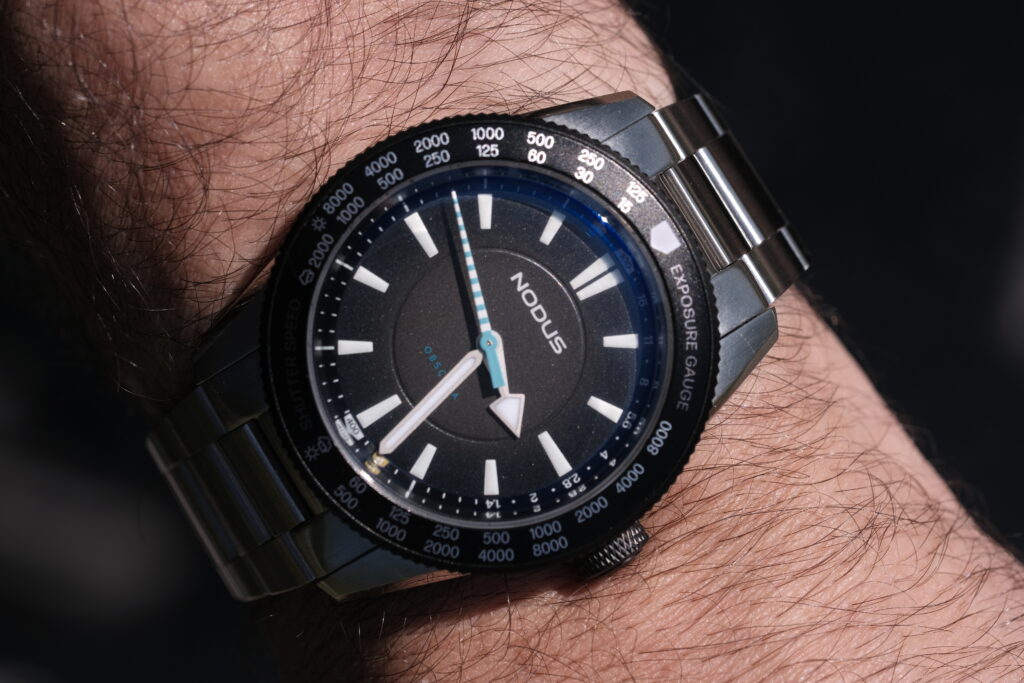
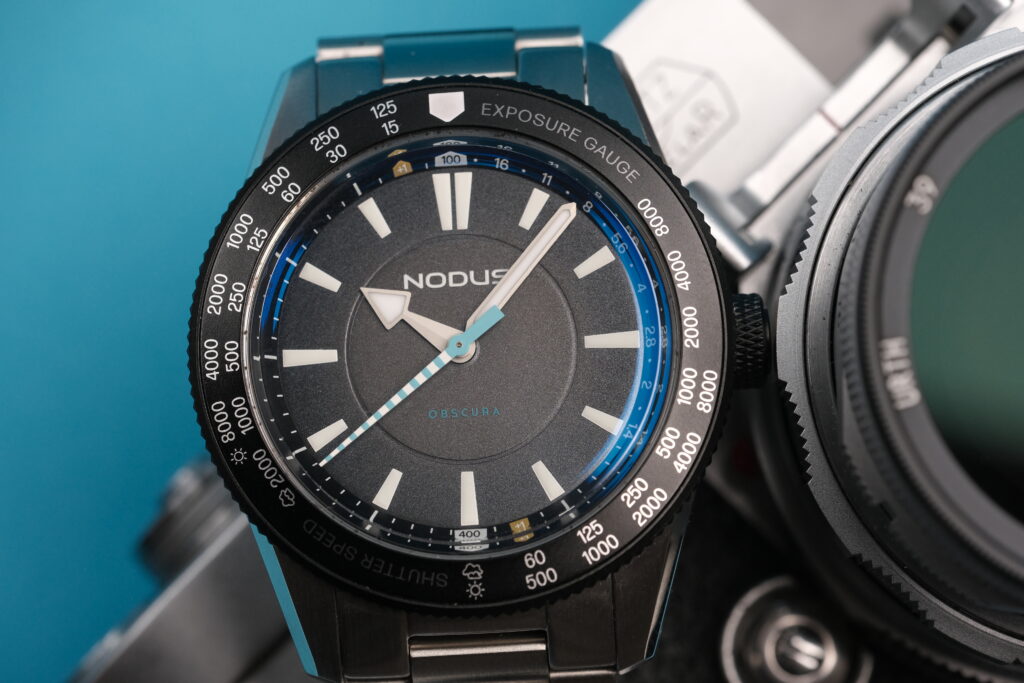
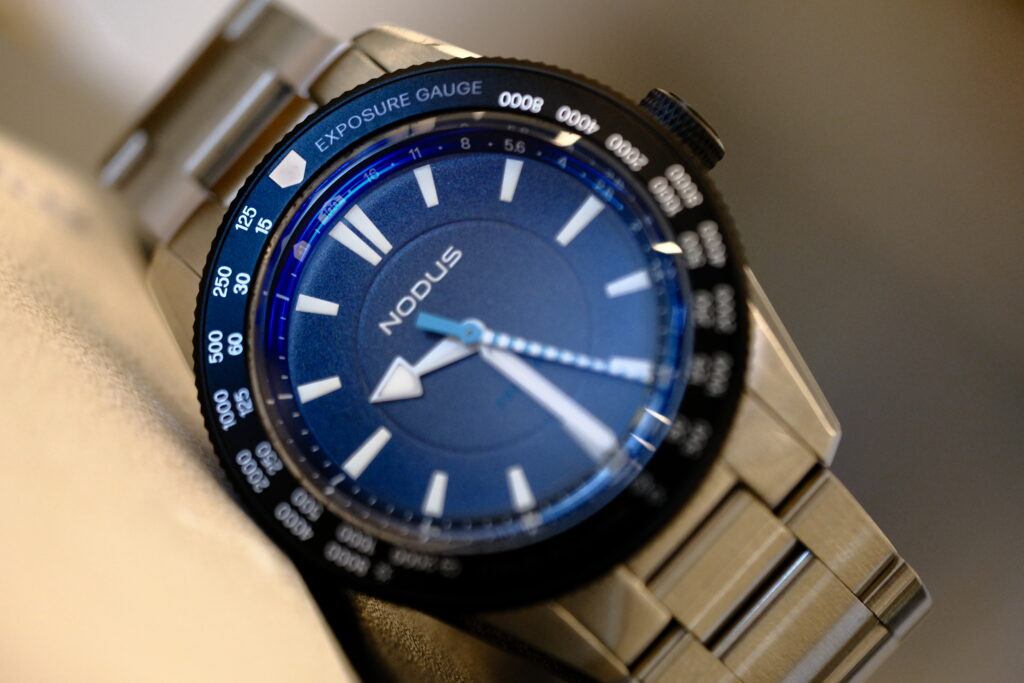
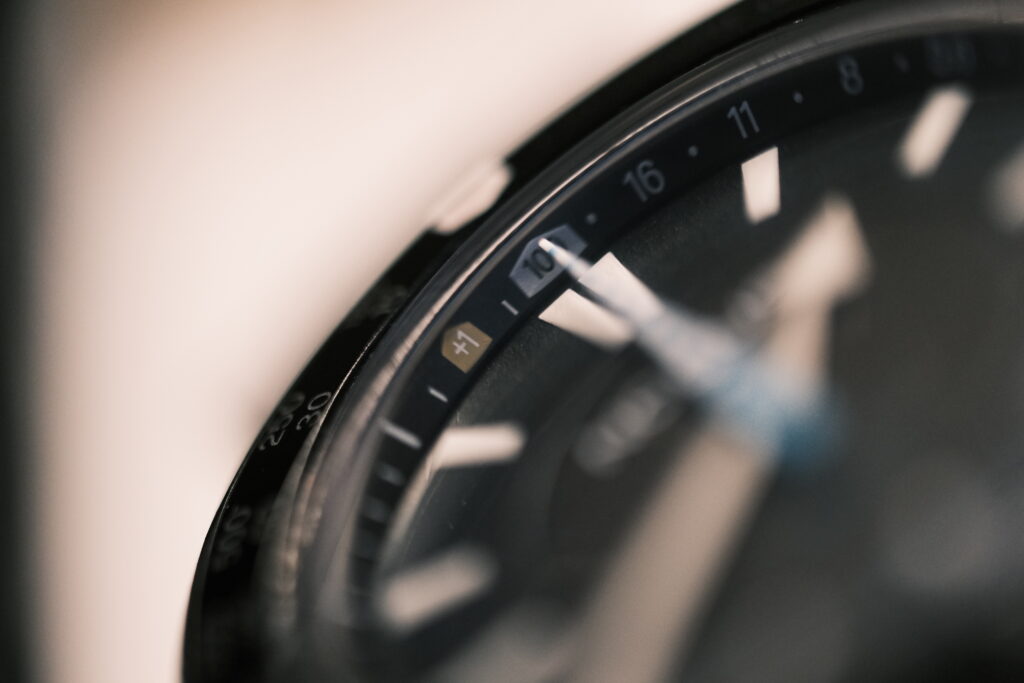
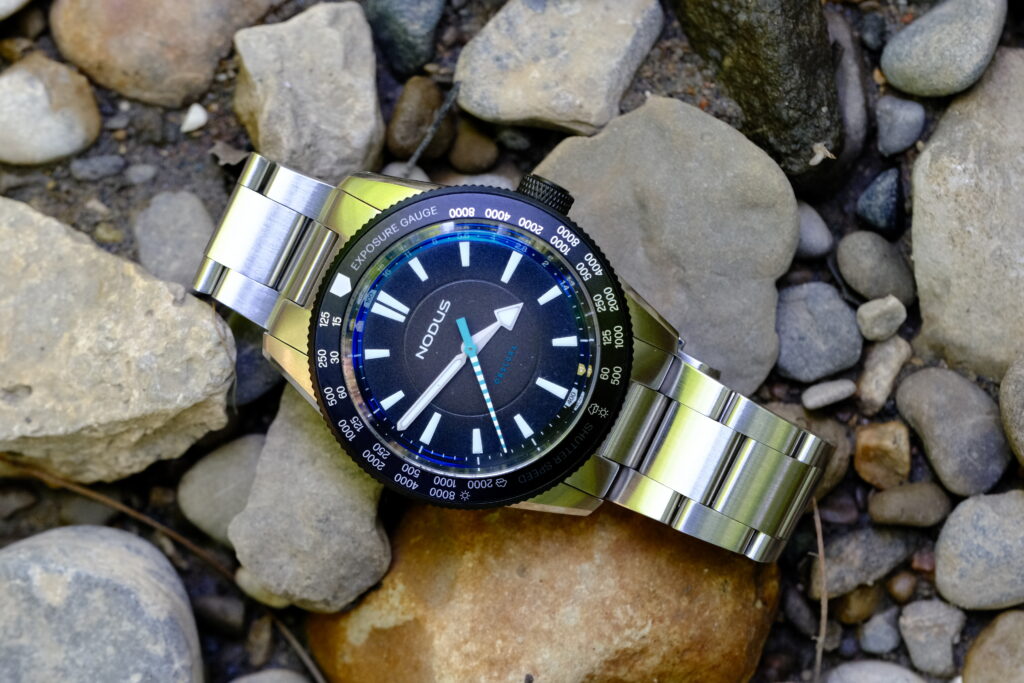
The exposure complication on the Obscura can only be used in outdoor environments during the day. The chapter ring is split between two ISO ratings, ISO 100 from 12-6, and ISO 400 from 5-16. The bezel is split accordingly as well.
The numbers within the chapter ring refer to the aperture that you would like to shoot in, ranging from F1.4 to F16. There are lenses that can range from F0.95 to F32 and higher, but this bezel covers most lenses. It should be noted that most film cameras do not shoot faster than a 1/1000th of a second.
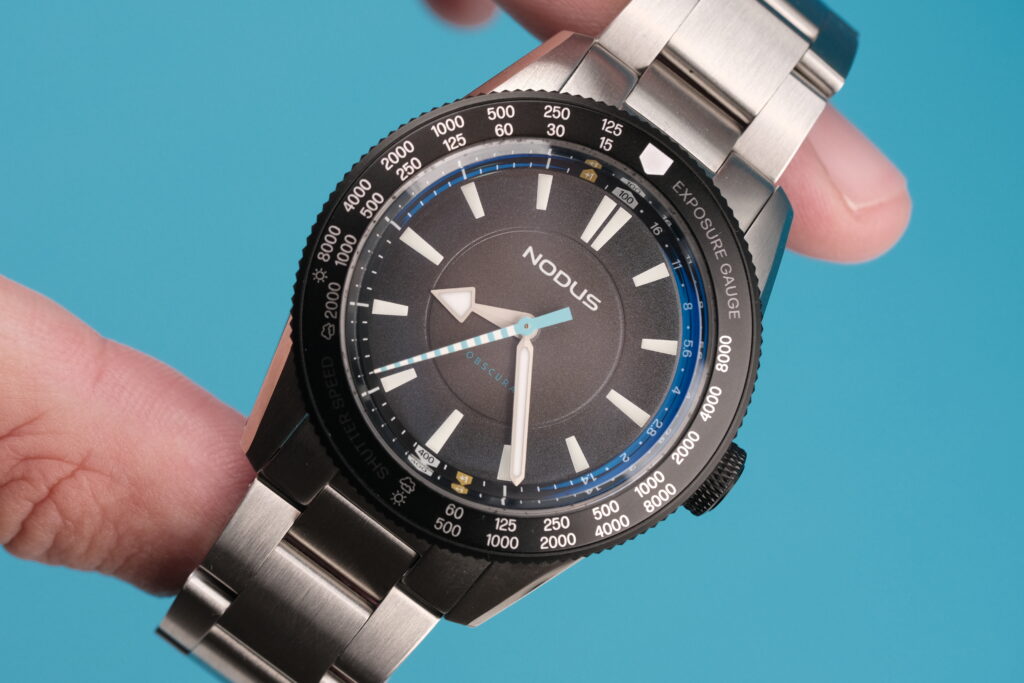
When you have lined up the exposure pip on the bezel with the desire aperture, its number will reflect the shutter speed required during bright and direct sunlight and that of an overcast day. That is how easy this complication is to use, and this is why I ultimately recommend this watch for beginners and to those who do not have the time to build the skillset of reading an exposure themselves.
The Practicality of Analog Scales in a Digital World of Convenience
There is a fundamental issue that must be addressed first when discussing scales on watches. Almost all scales and bezels on a watch that relate to a profession, whether that be of scuba diving, aviation, or in this case, photography, offer to perform a task for a very small subset of the population which actually earns a living in the field. These products, in reality, serve a much greater mass of people who dabble in these fields for their hobbies, or who want to project the image related to the watch, and who are typically more vocal than the professionals using the tools.
For the purposes of this article, we will not be taking into consideration the opinions of hobbyists and enthusiasts, for their perspective on the topic is one based on convenience, entertainment, fleeting interests, consumerism, and their individual projections of their identities. We’ll start with various diving bezels on watches before we go into the Sunny-16 scale on this Nodus, for typical elapsed diving bezel is amongst the most common features on analogue timepieces.
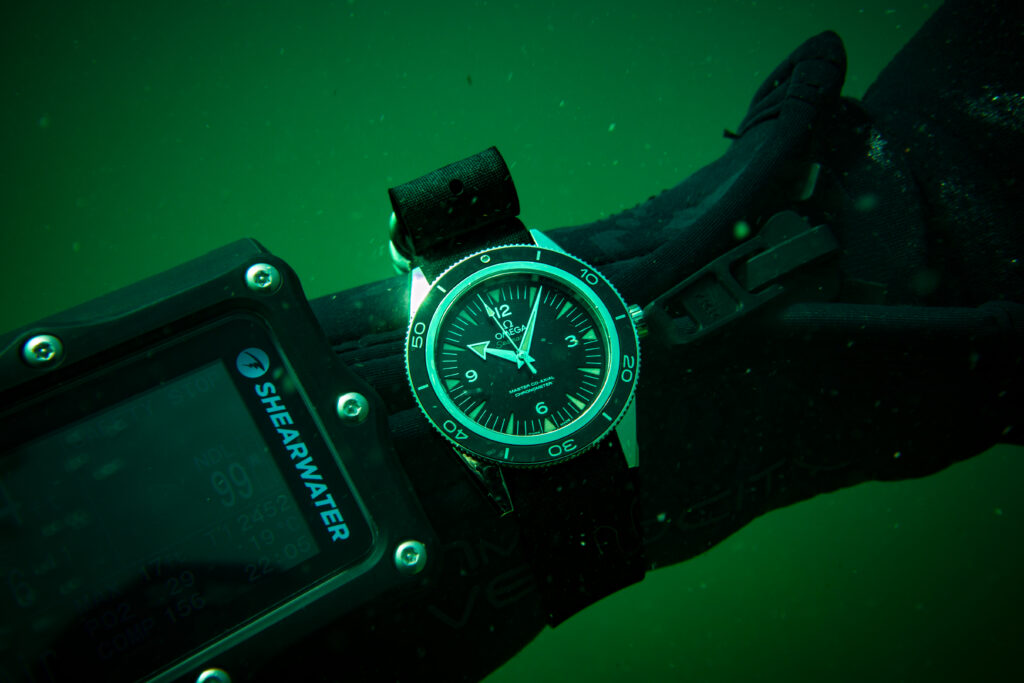
My Seamaster being used in a work environment.
My social media inbox up until the pandemic had usually been filled by enthusiasts who bought an expensive dive watch with a decompression scale, either on the bezel or the strap, who would then ask me how to use it. After giving them the quick run through on the dated scale, typically from the US Navy from the 1960s, on their watch, I would also make it clear to them that I would never use them while on a dive. There were two occasions many years ago I did out of curiosity, however. This is of course due to dive computers, but also on how these static analogue scales on watches and even algorithms on dive computers are not sufficient for complex dives, or times when one is doing several dives every day over a period of time. Yes, dive computers are not the be all and end all of ensuring one has a safe dive or not. Factors such as temperature, time at depth, diet, hydration, sleep hygiene and the constant self-monitoring of one’s condition and health all factor in greatly into when one calls a dive for themselves and the group they are diving with.
This being said, I do dive with a dive watch and rely on it. As discussed here, I rely on the watch to first, tell the time, second, aid lessons and students, and third, to keep an eye on surface intervals and incidents at the surface and underwater. For my specific purposes of taking care of others while at depth, a traditional dive bezel and a prominent seconds hand are essential to my operational capabilities in a dive setting. One’s dive kit is usually equipped with plenty of redundancies such as two computers, a mechanical submersible pressure gauge, and even a small toolkit to fix small and common equipment issues at depth. A watch is a device with a clear mission objective in a dive setting – to tell the time, possibly the date for incident and general reports, and reliably measure incidents with an elapsed timing feature such as a dive bezel. Laypeople will claim that all one needs is a dive computer on a dive, but every dive weekend, I am asked by a coworker what the time is several times as we are looking after other humans. Boat captains chartering dive boats almost always wear a heavily water-resistant watch, for they are responsible for the safety of everyone on board, even when they are underwater.
When it comes to photography, especially when working with film, an available light meter in dynamic environments has been a constant tool in my kit. This can vary from a small basic light meter which receives the general reading for the environment, to the light meter within the film camera body itself, or a highly targeted light metre like the Sekonic Speedmaster.
During my time with the Nodus Obscura II, it became very clear to me who this watch was for. The Sunny-16 rule for exposing film is at best an estimation for the general exposure of a scene. The more complex the scene, the more complex the subject matter, or the less flexible the film stock is, the less useful this rule is, for it is a shorthand. When out shooting, one usually has to factor in whether they are shooting to preserve the highlights or shadows, and this scale will offer a nice foundation for this. An extra step of adding or taking away a stop of light would negate this, but by how much exactly? You’ll have to find out after the film is developed and scanned, and gauge properly the latitude and flexibility of the film stock you are shooting with.
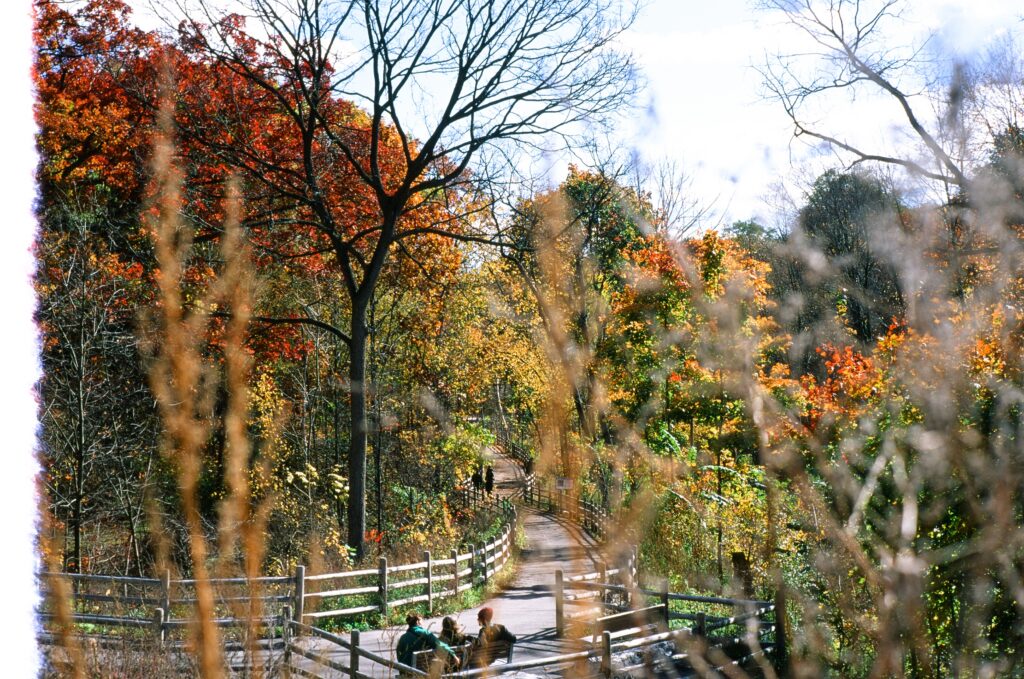
Image made with Fuji Velvia 50 and the Leica 50 Summilux V2. An example of using an external light meter to expose for elements of the landscape I wanted to capture while using slide film, which is known to not have much flexibility.
To get exact exposures for say, the shadow under the chin of the subject, I’d either use a direct or incident light meter, of which the Sekonic Speedmaster mentioned above is second to none. Even for complex landscapes, I will use the spot meter on the Sekonic Speedmaster to correctly expose for a small point of interest within a vast scene.
Thus, this scale is best used by beginners and enthusiasts, for seasoned shooters will either instantly be able to tell what their exposure settings will be, either through taking readings before and throughout the shoot, or by years of putting in the reps and not needing to rely on a meter in the first place.
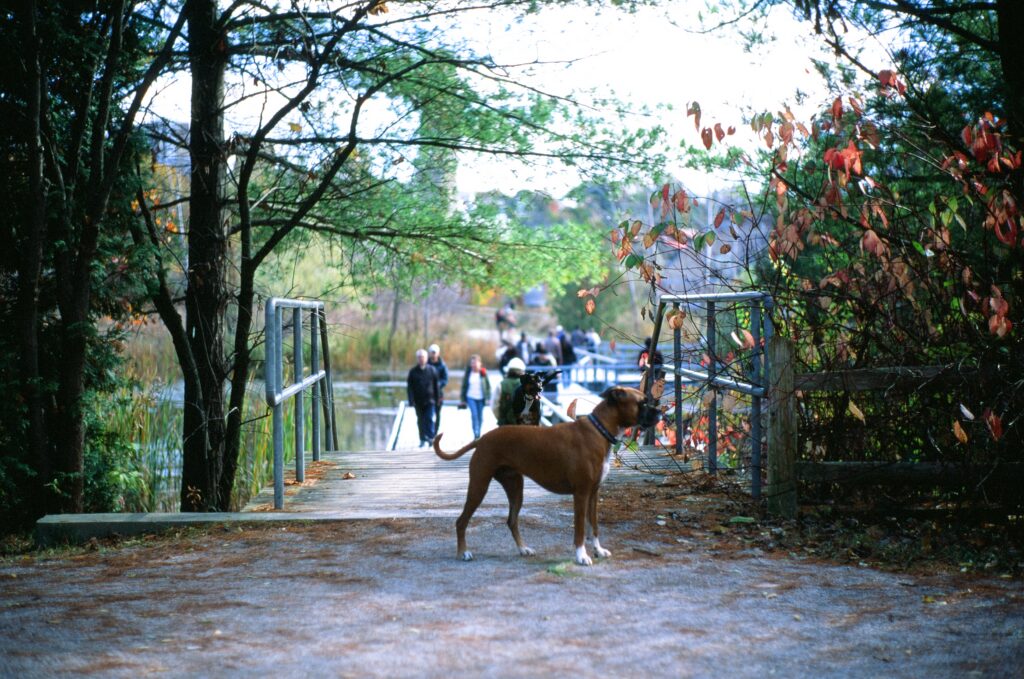
Image made with Kodak E100, shot at ISO 100 with the Leica 50 Summilux V2.
How the Nodus Obscura Performs as a Timepiece and as a Photography Aid
Nodus has been making watches for long enough to now be considered as one of the established and incumbent brands within the global independent watch brand space. Their years of experience and urge to constantly improve their watches through constant advancements in manufacturing, materials, designs, and practical uses has led them to make serious tool watches. This is what separates them from other brands, for they embrace the developments made in manufacturing on a quarterly basis, and keep pushing their offerings to be at the forefront of what is possible within their operational and pricing brackets. Notably, their Nodus Sector Deep has become a popular watch for first responders and those serving in the military, and it’s one of my favourite dive watches to use in a teaching role.
So, when the co-founder of Nodus, Wesley Kwok, long before the release of the Obscura, messaged me about a watch using this patented Sunny-16 scale, I was quite confident in the watch being competent as a time-telling device, but unsure about its usefulness in a photography setting. Before we sing and unleash the full battery of praises at the Obscura, we’ll touch on one glaring omission – the lack of a date window. Beyond the usefulness of bezel in complex environments, film photographers, myself included, mark our film canisters with the date, canister number for the project, and whether the film needs to be pushed or pulled. The only other function or complication which would be useful for a photographer is the sunrise and sunset time. This would require a much more elaborate and expensive complication, think six figures, but the operator can simply look those times up before they head out with their camera.
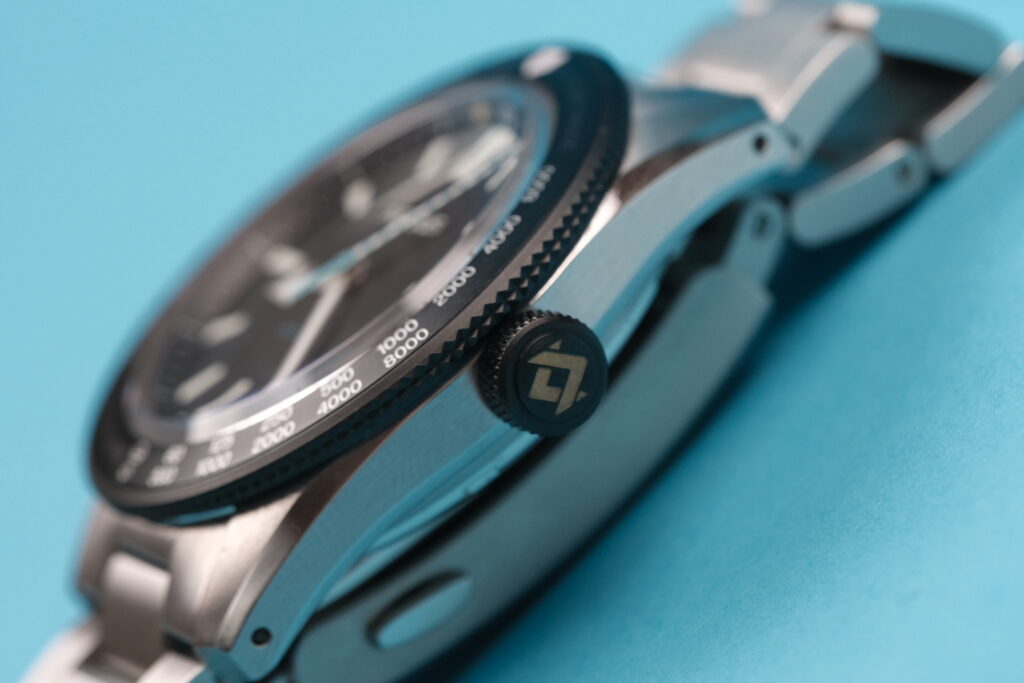
The bezel itself is a joy to use, with sturdy and positive clicks as it moves bidirectionally from twelve to four. In practice, the Sunny-16 scale does actually work, as its general reading was mirrored on all of my external light meters at hand, including two internal light meters from a Canon AE-1 and a Leica M6. In reality, this bezel is perfect for beginners, or those who only shoot film a couple of times a year and do not have the opportunities to gain the skillset necessary to measure the exposure of a scene without aid.
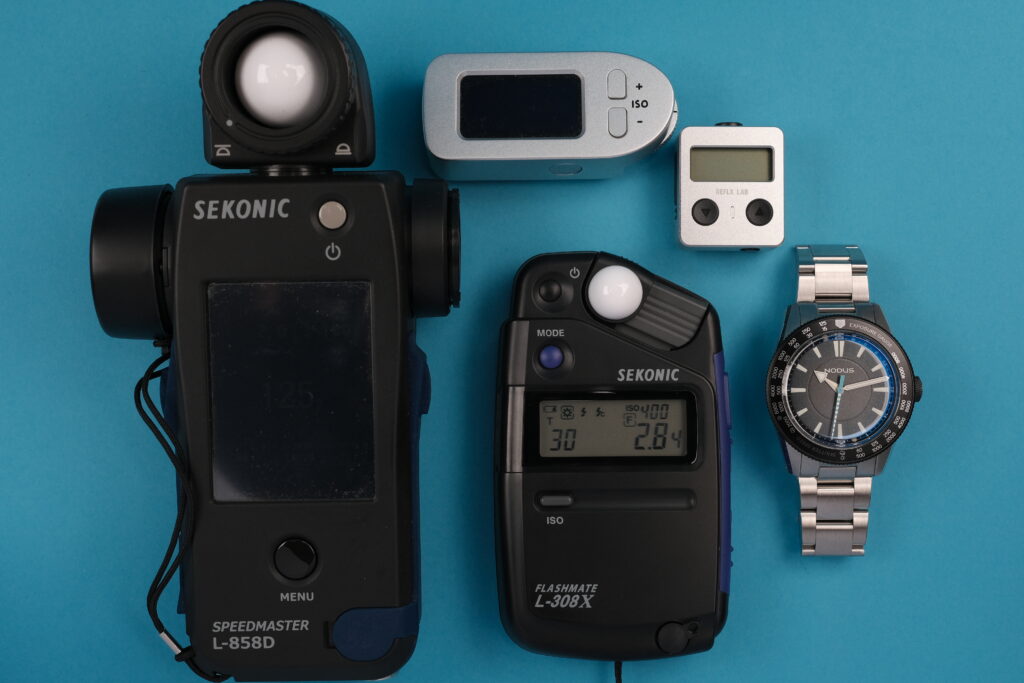
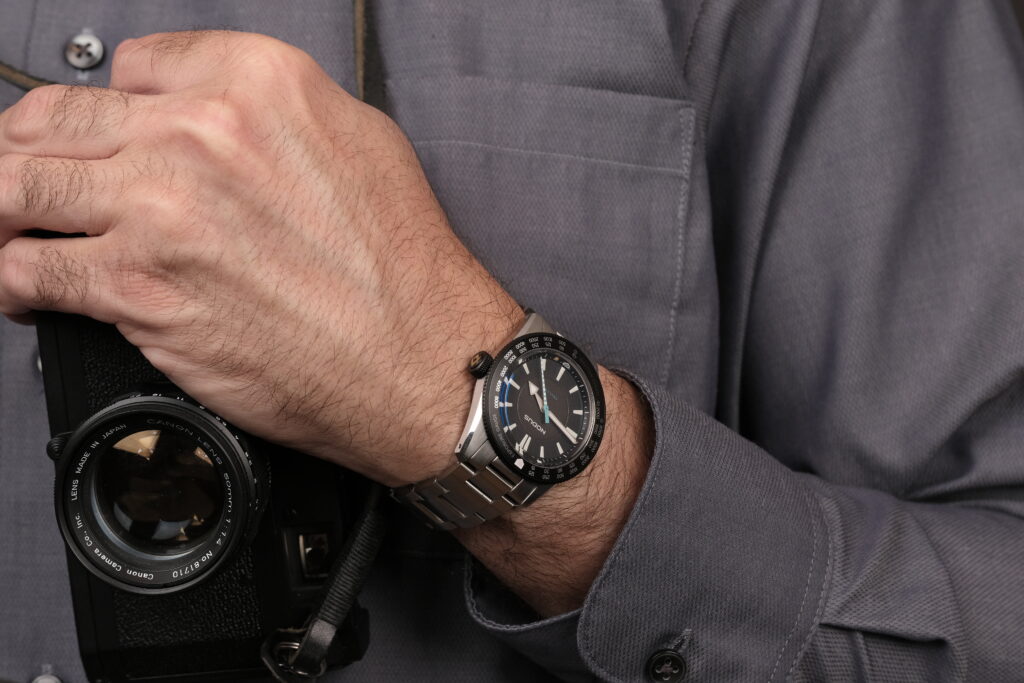
The Obscura with my favourite light meters.
There is one factor which enthusiasts would appreciate of the bezel. It and the crown are made of bronze. Vintage cameras made of brass typically lose their finishing and the brass starts showing through over time. These cameras, especially “black paint” versions by Leica command a hefty premium, and thus, are a focal point of fascination for collectors and enthusiasts. One assumes that the printing of the scale itself will also wear off with time, but hopefully by then, the operator of this timepiece will no longer rely on it for correctly exposing their compositions.
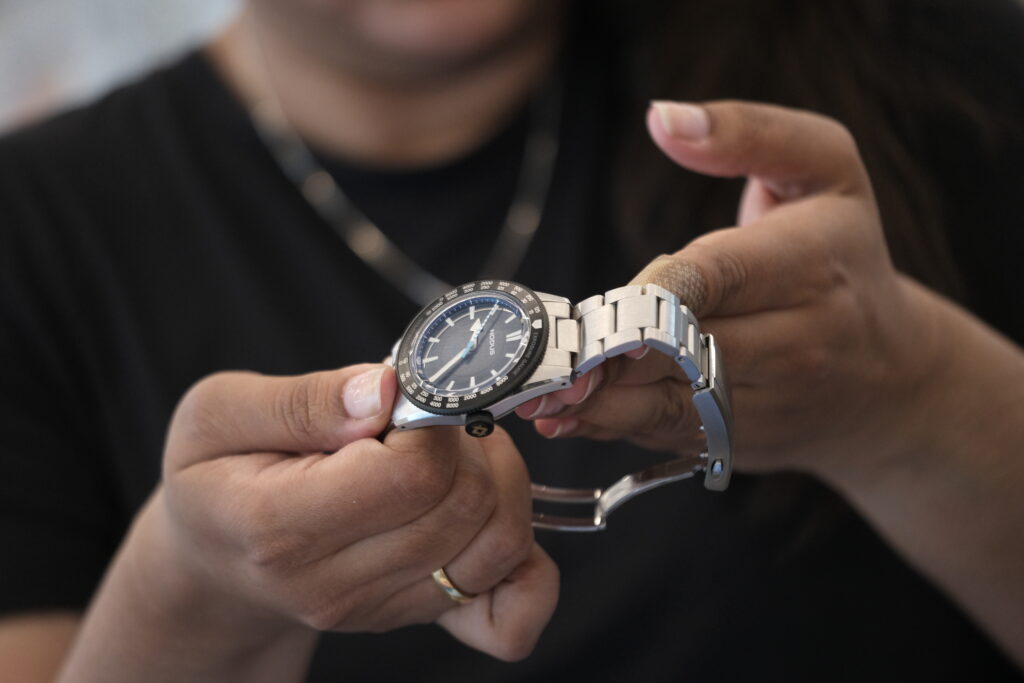
The Nodus Obscura II being held by another writer who caught a typo in this article.
How the Nodus Obscura Fares as a Watch
The quality and attention to detail of the Obscura is simply impressive, regardless of price point or manufacturing origin. The grey dial is meant to mimic film grain, and in practice this means that the owner gets multiple dials in one. This dial changes its character depending on one’s setting. It can be as cold as the lighting in a depressing 24-hour Walmart as you try to navigate past an arguing couple as they unload their arguments over which hair dye would look best with their matching outifts, to as warm as a sunset by your favourite lake as you inhale the particulates from wildfires a couple of hours away.
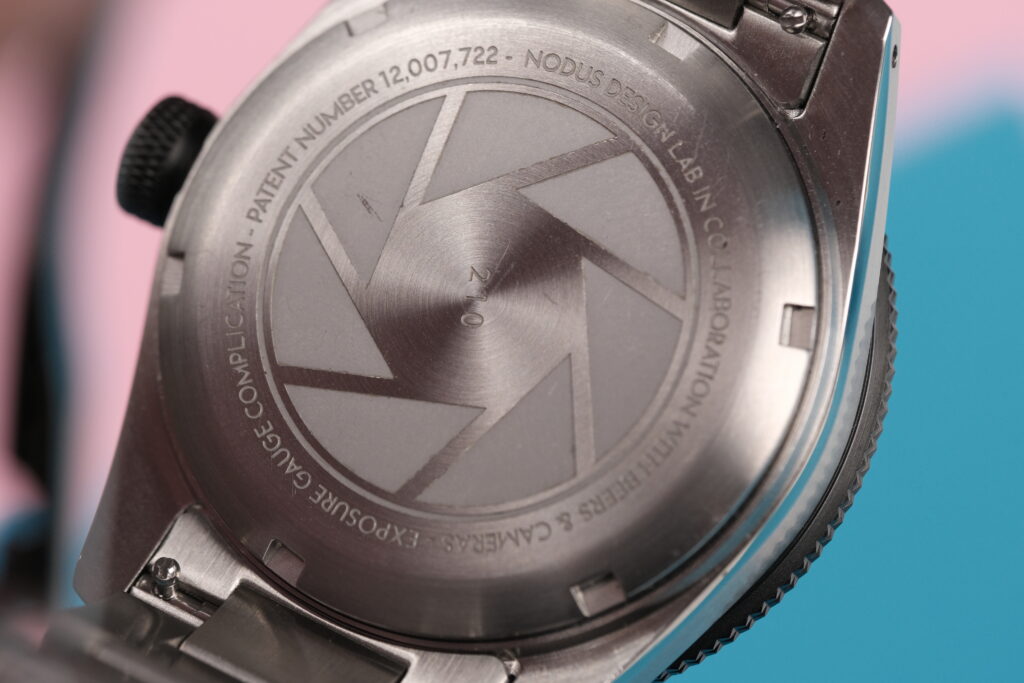
The DLC finishing of the aforementioned bezel and crown act as strong framing devices for the amorphic dial, while also offering the pleasing pastel blue accents and singular mustard +1 indicator on the chapter ring a sober boundary. The white and pastel blue seconds hand is whimsical, and to be honest, I’m actually here for it. If you’re not, there is a fair chance that the attendance list percentage for your funeral would be significantly impacted by the number of staff at the funeral home. This charming seconds hand is inspired from light meter indicators from decades past.

Photograph made with Kodak TMAX 100 at ISO 100, with the Leica 50 Summilux V2.
The rest of the watch is your standard Nodus fare: reliable, sturdy, legible, and now very clearly not anything else on the market. Gone are the days which watches sporting this brand’s name could be confused for a Seiko, and this is a great thing.
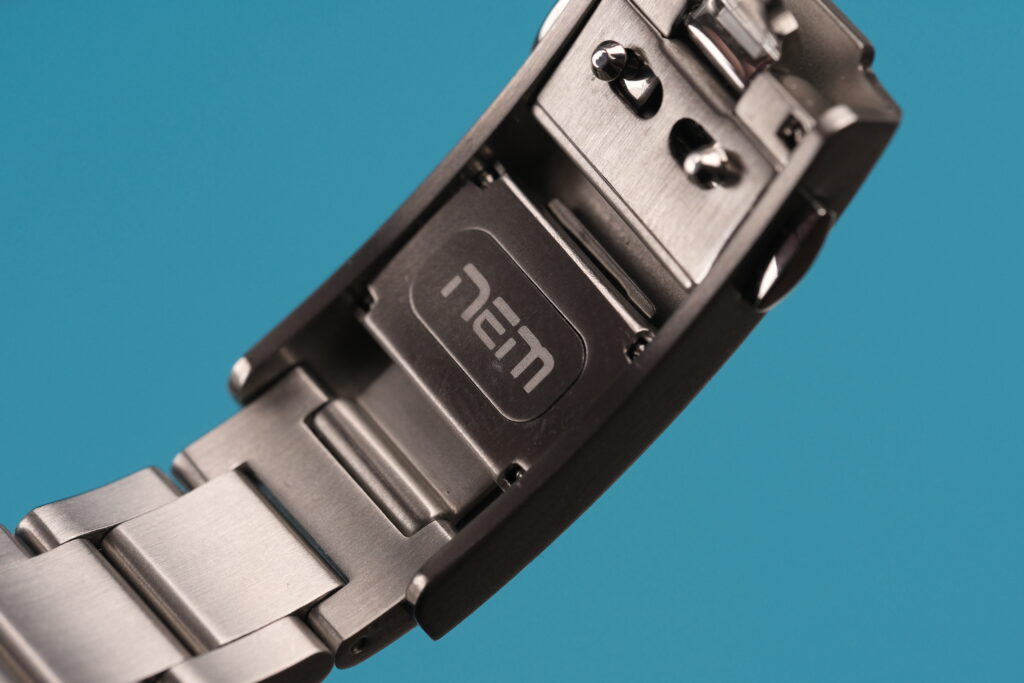
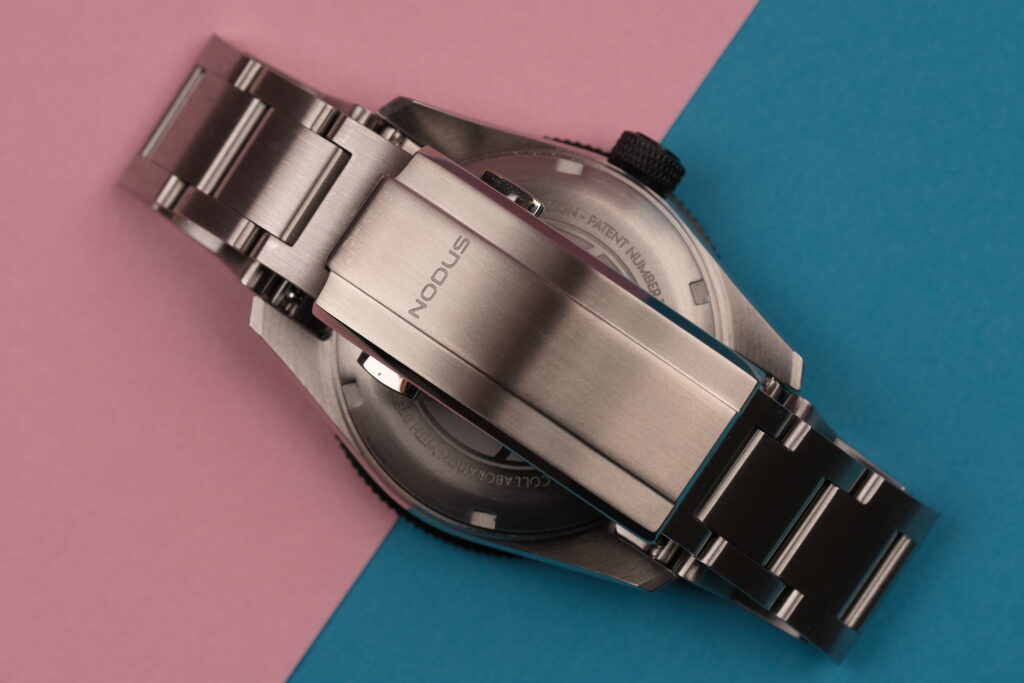
The brushed case and bracelet finishing on this watch are only broken up by the polished chamfers on the lugs which directs one’s eyes inward towards the bezel and dial. The Obscura II is also available in an all DLC finish. The newest iteration of the Nodus Extension Module clasp is unrecognizable from its first version, this time almost serving as an ingemation towards how far Nodus has come. This clasp feels like it could structurally support your mental state as you divide your assets in the middle of a divorce.
The hands and the BGW9 Grade A Super LumiNova ensure legibility in almost every situation save for the second week of being trapped in a flooded cave with an amateur football team in a foreign tropical island nation. As an aside, I joked privately with the Nodus team that the bezel should be fully lumed, so that one can be reminded of how useful the bezel is at night or indoors. After all, one needs to be outside during the day to use this Sunny-16 complication.
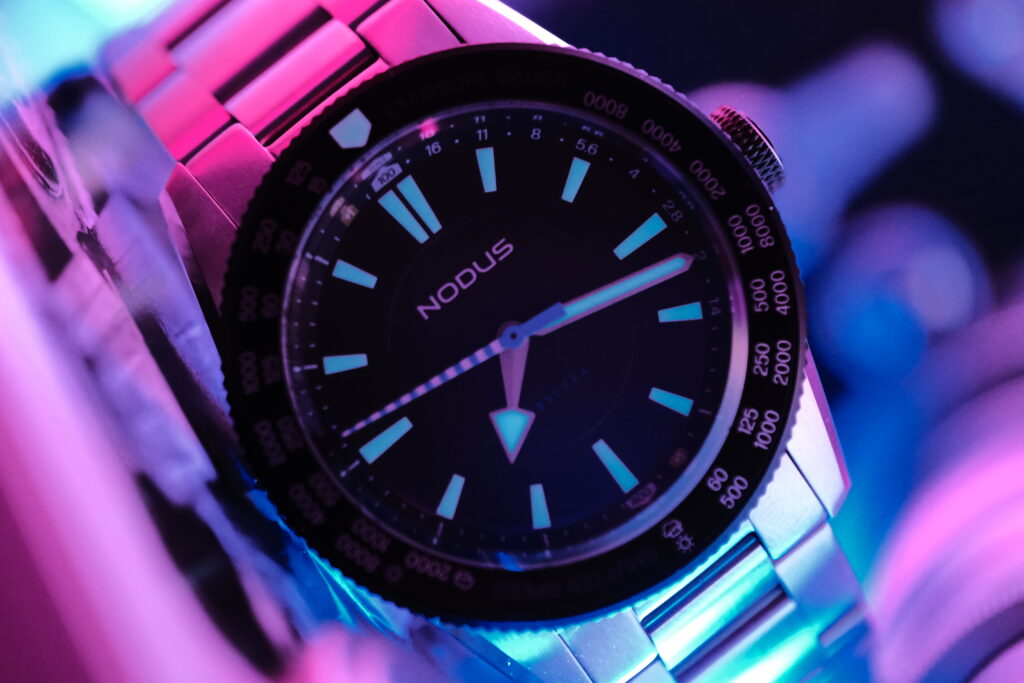
The highlight of the Obscura is the gorgeously domed sapphire crystal and how taught its placement is within the bezel. The fit and finish of this watch keeps rewarding its owner with every glance, and every opportunity to simply touch it. Everything about the Obscura II exudes quality and attention, and every potential owner would look down upon their copy and feel well about their purchase.
Does This Watch Make Sense in Today’s Climate:
In one word, yes. As the world’s open wounds from the pandemic widen and never get the chance to even scab over as nonsensical global conflicts from the Baltics to the Middle East continue to raise the costs of everything, especially any chemicals which are byproducts or reliant on petrochemicals, the cost of shooting film is only going to skyrocket from here. The fact that you may shoot film less due to rising costs makes this a more viable tool as you may never fully develop your internal light meter.
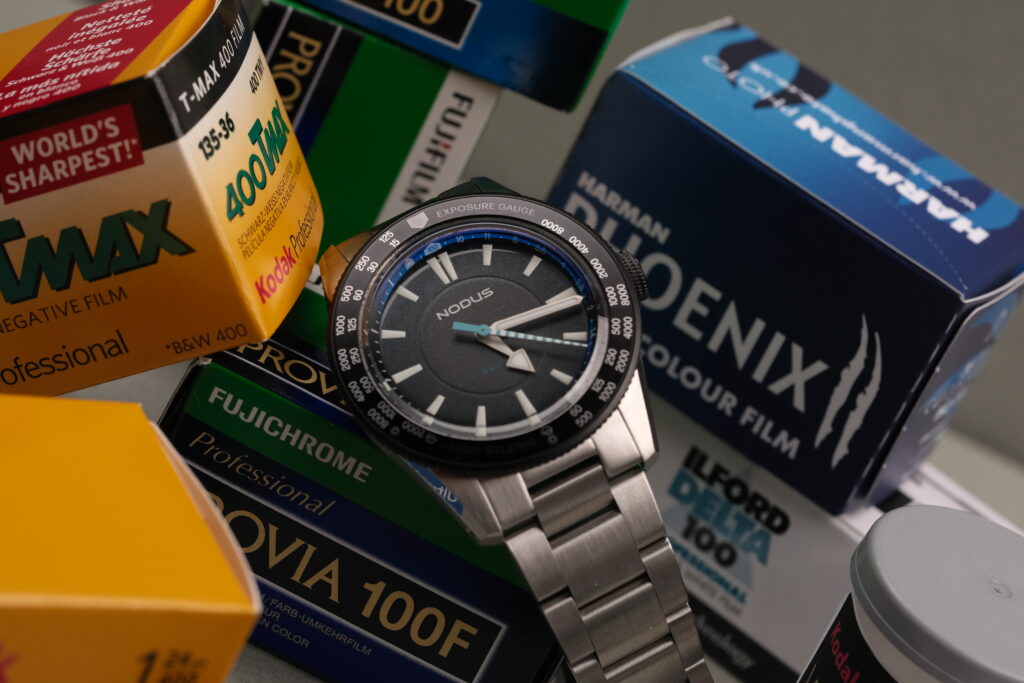
Making matters worse, are the hilariously irresponsible over investments and expenditures on data centres for generative technology, which directly impacts one’s digital storage of the files being scanned. One can argue that at least they have their developed film as a backup, but this only adds to the costs of shooting film. The last two times I met photography enthusiasts, they complained about their most recent camera body models being equipped with sensors that are too high resolving. This resulted in higher costs for their backup hard drives and having to increase their cloud storage subscriptions. The fallacy of digital photography being free has caught up to the masses, and has made film photography even more out of reach for the layperson, for they have to store the high resolution scans on top of storing the negatives safely.
The Nodus Obscura II then only makes sense for those who want to portray themselves as analogue photographer, or someone who is just getting a grasp of the hobby as they can only afford to shoot film on occasion. Thankfully, there is a quite a large market of these consumers, and the Obscura II should be a strong seller for Nodus, and help garner a gathering from a passionate base who are willing to set aside time, funds and in some cases, reason to make art.
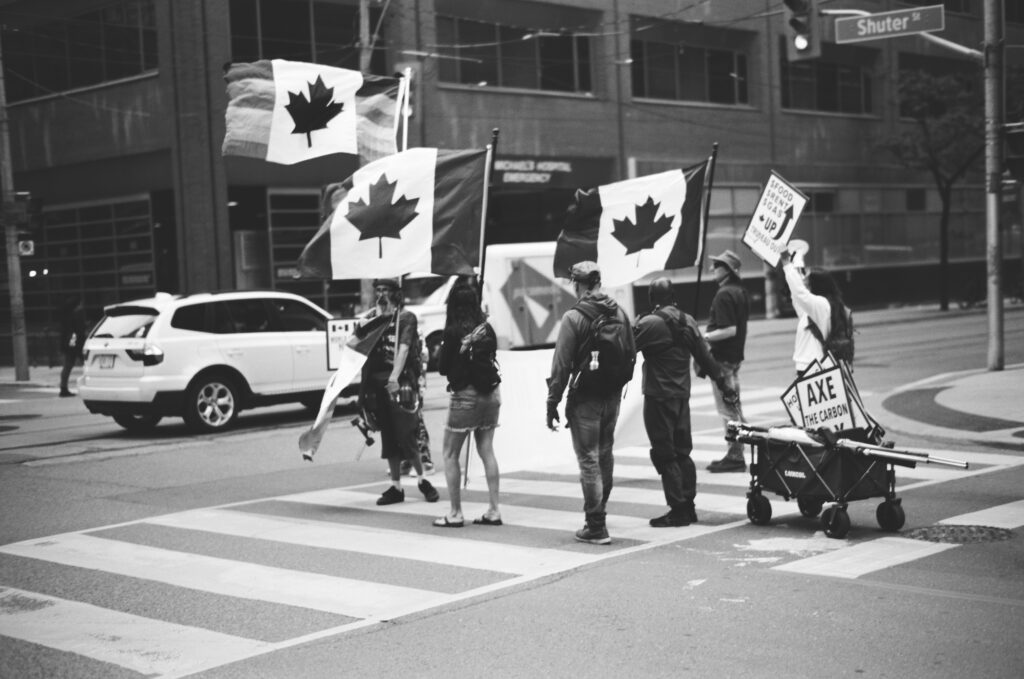
A nonsensical protest in Toronto. Image made with Ferrania P30 at ISO 80 with the Lecia 50 Summilux ASPH V2.
For those of you who do not shoot film, you may ask yourself why some would go through the extra steps and expenses to do so. First, film handles highlights and shadows chemically, thus the chromatic aberrations that litter most digital files save for those made from an apochromatically corrected lens that employ aspherical elements and advanced coatings are absent. These aberrations appear in areas of extreme high contrast and usually have a strong colour cast to them such as green or magenta. These lenses tend to be more expensive, and in some cases out of reach for most enthusiasts.
Second, since the process of developing film is a chemical one, larger format film illustrates the gradations in tone, colour and depth far greater than a digital file. This gives these images an “organic” feel that, when replicated digitally, either through over-editing or touching up, can have the uncanny valley. Film tends to soften features and when coupled with a vintage lens, its effects can look more realistic than the works of most modern portrait photographers.
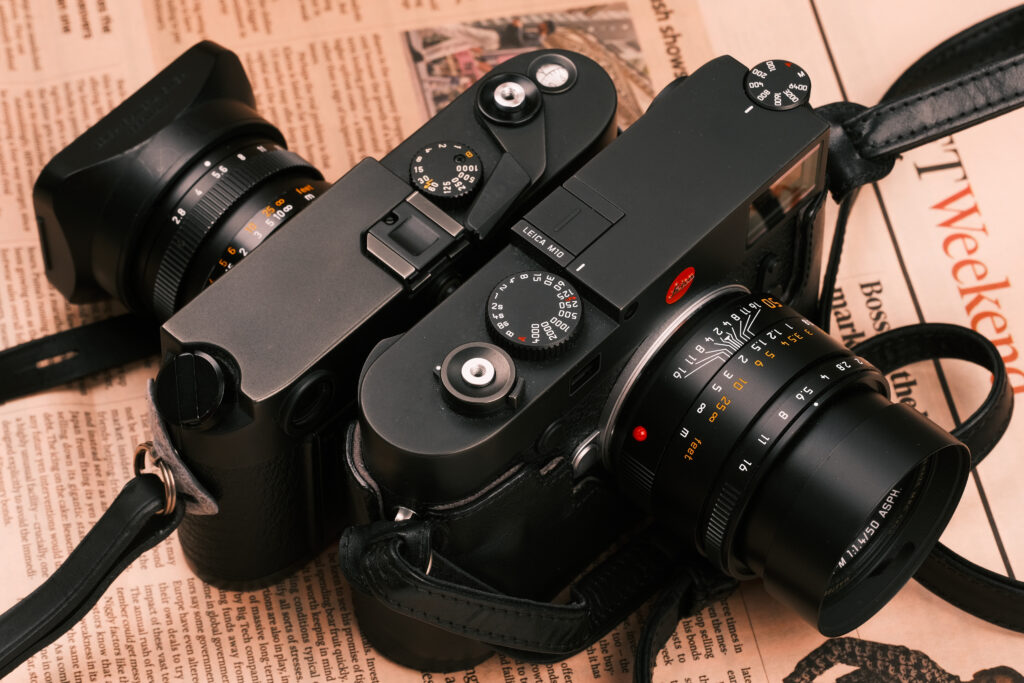
Some of the most fulfilling projects were with clients who had a deeper understanding of photography. Some requested vintage lenses, and being able to use the same set of lenses on a film and digital body to create a uniform, consistent look for the project was an immense privilege.
Third, when using vintage lenses, one attains a degree of character that when married to film achieves a result that is simply artful. The more character the lens has, the more the print will look like a work of art whose out-of-focus elements resemble masterful brushstrokes from a painter’s brush. One can edit a digital image to look like it was shot on film, but the handling of the aberrations and character are ultimately why someone would choose film over digital.
In Conclusion:
So, should you get the Nodus Obscura II? If you are a photographer, photography enthusiast, or a collector who appreciates great manufacturing, design, and a useful complication, then of course you should. It is often too easy to take topics such as these too seriously, and to criticize the actual purpose and use of such a timepiece. At first, I came at reviewing this watch with the same degree of severity that I treat my dive watches. But that is the thing. If you use the Sunny-16 scale on this watch incorrectly, you may waste anywhere from $30-60 on a roll of film and developing it. No one is going to die, and you won’t be leaving a group of humans astray during their advanced open water course. The Obscura is a brilliant time-only timepiece that can step in on the occasions when you are shooting a film camera outside during the day. If the Obscura was not made as beautifully as it was, then the watch would be a failure. Thankfully, this is not the case. The only area of improvement is the addition of the date window. This will fully allow the photographer to stay away from their phone as they are shooting multiple rolls of film on any given day, and to stay in the moment.

Photograph made with Kodak TMAX 100 shot at ISO 100, and the Leica 135 Elmarit.
All creative and productive ventures benefit from being allowed to fall into a steady and uninterrupted workflow. By not having to reach for one’s phone, either for a light meter app or to check the date or sunset time would be a boon for those who reach for their camera to escape reality, while also documenting it.
You can purchase your very own Nodus Obscura here.
Specifications:
Case: 316L stainless steel
Case Width: 38mm
Case Width with Bezel: 40mm
Thickness: 11.7mm
Lug-to-Lug: 47mm
Lug Width: 20-16mm
Bracelet: 20-16mm with the Nodus Extension Module with quick-release spring springbars
Water Resistance: 100m
Lume: BGW9 Grade A Super LumiNova
Crystal: Sapphire with anti-reflective coating on both sides
Bezel: bi-directional Al5 bronze with black DLC coating
Weight on bracelet sized for a 6.85” wrist: 135 grams
Price: $650 USD