1,051 words
Time of writing: Tuesday, November 17th, 2026
Note: Great lengths were made to avoid spoiling any of the details of the game in this review, as this is a narrative-driven game.
My first playthrough of Black Tabby Games’ Slay the Princess caused ridicule from a few of my friends. Upon the game’s first chapter, I happily decided to sit and wait for an eternity with the Princess that you are tasked to either save or slay by a mysterious Narrator. Echoes from years prior and my sole playthrough of Far Cry 4 started bellowing the day after as I walked past my SteamDeck.
In Far Cry 4, the game starts with you, the protagonist, having a seat with the game’s villain proceeds with a lengthy monologue of their purpose and reasoning for taking over the third world nation. As you are listening to him, the game continually prompts you to attack him and run away. I just sat there and listened to him. Even after he was finished talking, my character sat in the virtual world drinking the beverage he offered, as I in the real world, started running the numbers on what my character was about to do. My character’s goal was simple: stop this person from ruling this country, and destroy as much infrastructure and kill the thousands of (respawning) people and wildlife that stood in his way. The billions of dollars in damage would have sent the small nation into multi-generational debt from entities such as the IMF and leave it vulnerable to foreign state-backed interests in its resources. After all, not everyone can pull off what Greece has accomplished in the last decade or so.
As I was mulling the generational consequences of my character’s actions, the game’s credits started rolling for it assumed that I had sided with the villain in the game and decided to either not stand in his way or to join him. Which one? I could not tell you, for I was still going over the many regime-change flops over the last century and the billions of people who have and continue to suffer.
I was happy with this ending and never picked up the game again.
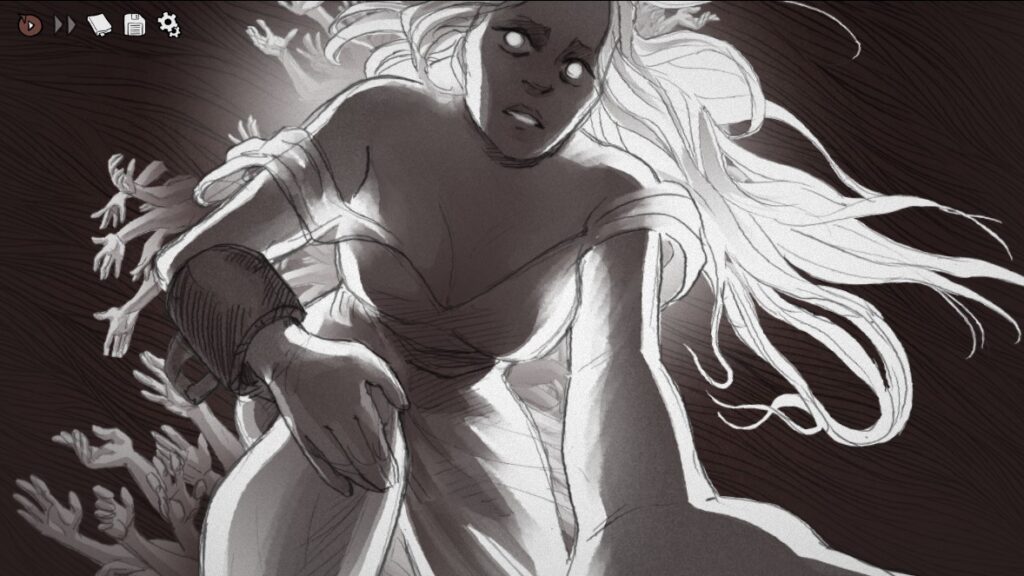
A couple of weeks ago when my first playthrough of Slay the Princess came to a sudden end, where the game ended and booted me to the desktop, I too was happy with that ending of simply waiting out eternity, but I would soon find out why, and it was not for the reasons that I initially thought, or for the reasons my friends teased me.
A couple of weeks later I picked up the game, and there she was, the Princess waiting in an empty void, saying that she knew I’d be back. From there, I had the choice to continue, and I did. The game’s Narrator, along with other voices pull you in either the direction of saving or slaying the Princess through multiple rounds of meeting various versions of her.
On that first playthrough, I noticed that at times the game took away the option for the pacifist route and not choosing violence. I found this completely jarring, and equally did so on the second playthrough.
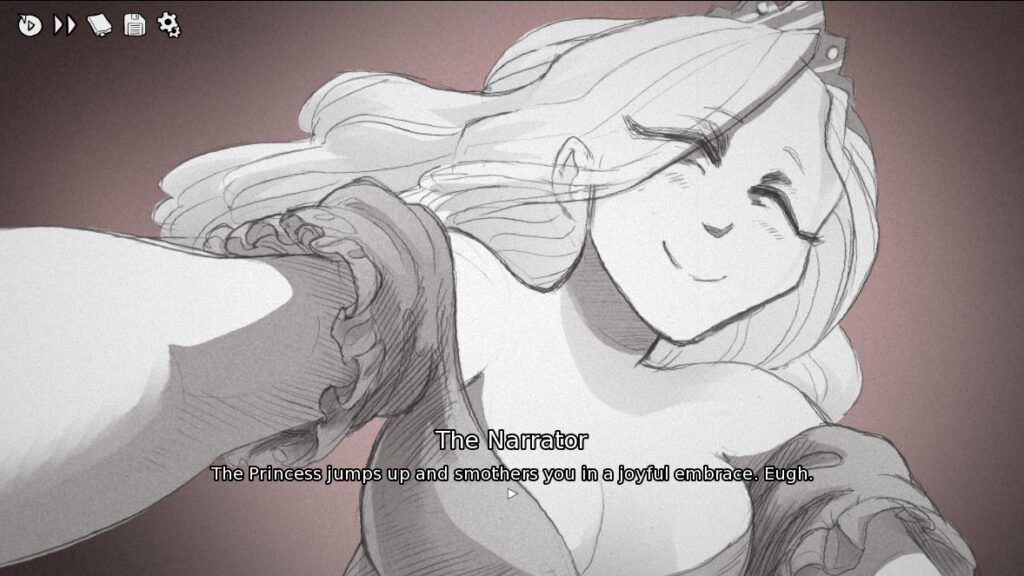
What I came to discover on my second playthrough was why I was comfortable with the thought of my character initially sitting in an empty void with the Princess, and as I did on my second playthrough, always do my best to be unarmed and to never act violently, or even be argumentative. This pattern of behaviour directly mirrored how I have behaved within a caregiving capacity for more than a decade. Whether the beloved person in front of me is undergoing radiation or chemotherapy, or if they are saddled with a debilitating state of dementia, I never blamed the person for any wrongdoings, misunderstandings, or for even assaulting me.
The game’s starting screen notifies the player that this is a love story, and that sets the tone before the game gets the chance to do so on its own. This is the only change I would make to the game to better allow the player to come to their own conclusion about what the game is.
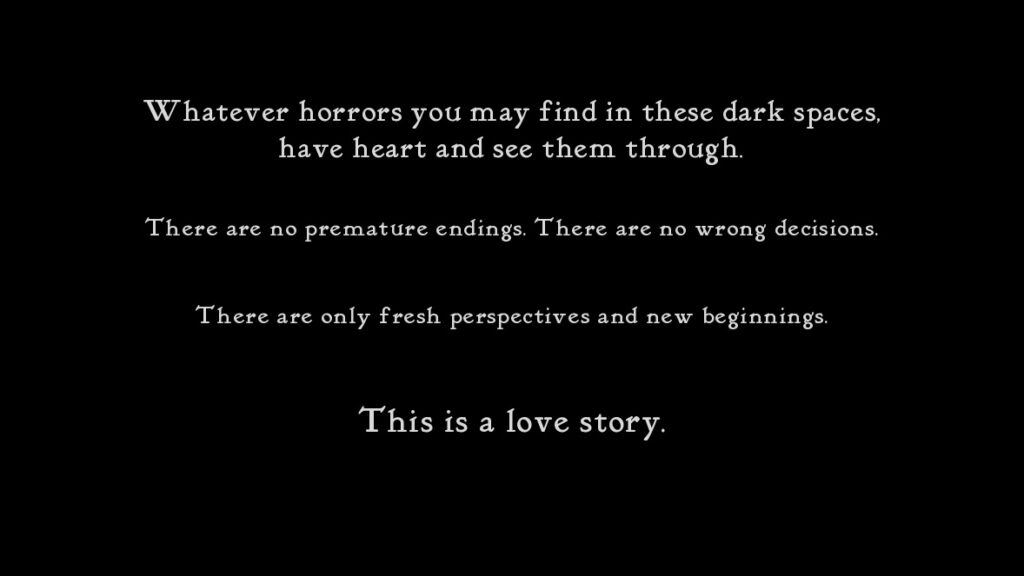
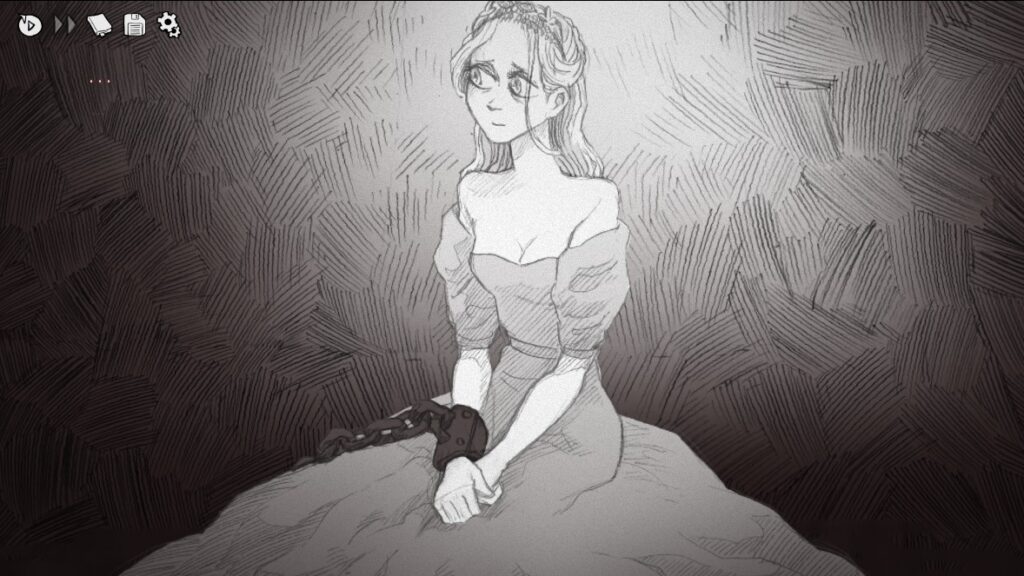
This splash screen instantly coloured my approach to the game, for I instantly saw “The Princess” as someone who was in put into a vulnerable position and state without their consent. Their physical capacity was rendered moot for she was tied to the wall by a heavy chain. Their cognitive faculties seemed to have been heavily damaged for they did not know their name, why they were there, and who are what were the forces that brought you two together.
Everything about her condition spelled out someone who had either undergone trauma and was in a threatening and hostile environment, and that she may have suffered a severe illness. Years of caregiving taught me the value in sitting with the discomfort and pain of the vulnerable person in one’s care, and doing one’s best to make their quality of life as good as possible.
More importantly, to never, never, lash out emotionally, verbally, and especially physically if forced to defend oneself. I am young, fit, and athletic, I can and have taken several thrashings at the hands of others and had the scrapes and bruises heal overnight. This is why the sections where the game forces your character’s hand to harm the Princess were so incredibly jarring, and to be honest, unwelcome. Nevertheless, there is an underlying narrative reasoning behind those incidents, and the game would not be the same without them.
Playing video games as an adult poses a lot of challenges. As I stated in my Over the Hill review, most people attribute their decline in gaming to be down to a lack of time and their diminishing reflexes. The reality of why gaming as an adult almost becomes impossible is that the set boundaries of most games are no longer acceptable for us. Intervene in a nation’s future? Not without a complete audit of the costs. Go on a treasure hunt while skilling an uncountable number of people? No. Slay, punish, or ever turn anything but an unkind thought or word towards a vulnerable person. No, fucking, way.
Nevertheless, if you have 3-6 hours to burn this holiday season and want to play a video game that is well-written, voice-acted, and will make you think along the way, then buy Slay the Princess and enjoy the ride.