
951 words
Time of writing: Thursday, August 6th, 2026
Overexposure to any field of interest or profession can and will lead to desensitization. New developments look familiar rather than novel and fail to spark any engrossment. Why should we care? After all, haven’t we seen it all already? Such lines of thinking bring comfort to both the laden and torpid amongst us. The notion of certainty in matters is often sought out as the reward from being preoccupied or absorbed in a field.
This, unfortunately, does not equate to mastery. The very contact sport of experiencing people, processes, literature, and yes, even consumer product goods has often given way to cognitive short hands, not to save time, but to secure one’s footing in their desired space. When you rely on the aggregated findings of others on the internet, you are not actually informed.
In all the time that I have been writing about topics which centre around consumer product goods, and from my life at work and with friends, I have always felt this disquiet. This fog of unease has grown in all walks of life I encounter due to the over-reliance and echo chambers created when relying upon generative software and the internet for a single view of the world. People have long taken the accounts from others and melted them into their own on topics which it is impossible for them to gain firsthand experience.
When reviewing the Jack Mason Strat-o-Timer, the opinions and thoughts of those who rarely think about timepieces were vital. It is all too easy to get carried away with manufacturing gains across the industry when holding several examples from varying brands over the last decade at once. The consequence is drawing conclusions that have nothing to do with what actually happened on the ground, and the decisions and efforts that went into bringing the product to market. This is where the regular consumer and enthusiast fall into the same pitfall.
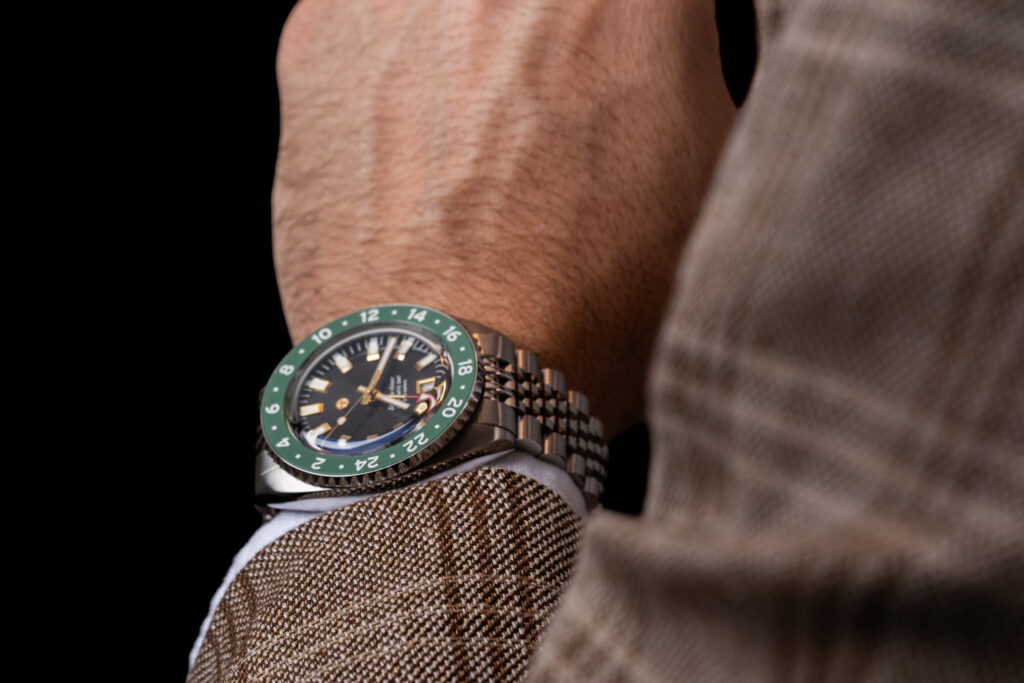
When I asked enthusiasts about their opinions on the watch, a pattern emerged. When only seeing a photograph of the timepiece on my phone, they stated that the watch looked like a Rolex and were not convinced about its quality since it is “probably just another watch rolled out of a manufacturer in China.” This line of thinking has resulted in being exposed to this insight over the last half-decade from the remarkable strides made in mass manufacturing in China.
The pattern changed when the enthusiasts saw the watch in person, and their opinions and observations converged with those of normal consumers when handed the watch. They all immediately focused on how substantial the watch’s bracelet felt, how beautiful the gold hands and indices were, and they all positively commented on the case shape. No mention of Rolex was made. Nothing was said about where the watch may have been manufactured. All I heard was praise.
Short-hand based on data gleaned from enthusiast-driven sites on the web only lead to an overview which is skewed towards a consensus that is not grounded in reality, but by what the mass population leans on for comfort and support.
Relying solely on the internet, whether it be Reddit or reviews, has created an informational cascade where when enough people tend to believe one thing, it then becomes rational for the individual to believe the same. This becomes magnified when generative software gleans data, words, and impressions from many sources and then averages them out. Francis Galton’s findings in 1906 about crowds being more intelligent fall apart and deviate from our very human trait of following the crowd when everyone is relying on the same faulty source. This is why many polls and forecasts that are based on the majority repeatedly fail.
Many fields are being challenged currently by the use of generative software, and in my daily life I am seeing the damaging inferences made from relying solely on them and turning a blind eye to those of experts or those with tactile in-person experience in the matter.
The damages incurred in the realm strictly of product reviews can range from the nearly inconsequential result of someone buying a product they did not like, to the highly consequential impact a falsehood can make on a small business that relies on the impressions of others to continue to drive business, and therefore, continue to exist.
After a decade of writing about such matters, there are two lessons which I wish to impart on you, especially now that the information on any topic is most likely filtered through a dynamic model which cannot be relied upon.
First, do not mistake an impression for that of an informed opinion and idea. Gaining such a stance only comes from using the product or tool for an extensive period of time, and from viewing it through a lens that is greater than one’s own. An example of this is camera enthusiasts who collect lenses and camera bodies, yet have no idea how to use them and spread misinformation that is based on user error. My favourite example of this was overhearing an enthusiast wearing their Leica M240 as jewellery around their neck as they advised another person to never buy a rangefinder camera for landscapes because it is unable to focus. Second, and most importantly, leave your phone in your pocket and go out and experience the matter you are researching in person. Basically, go out and actually touch the grass. This is the main difference between the opinion of an instrumentalist who views products in terms of how useful they are, versus those who just base their opinion on vibes.
Short hands are all well and good, except for when they are misinterpreted as one’s own view of the world.