(1039 words)
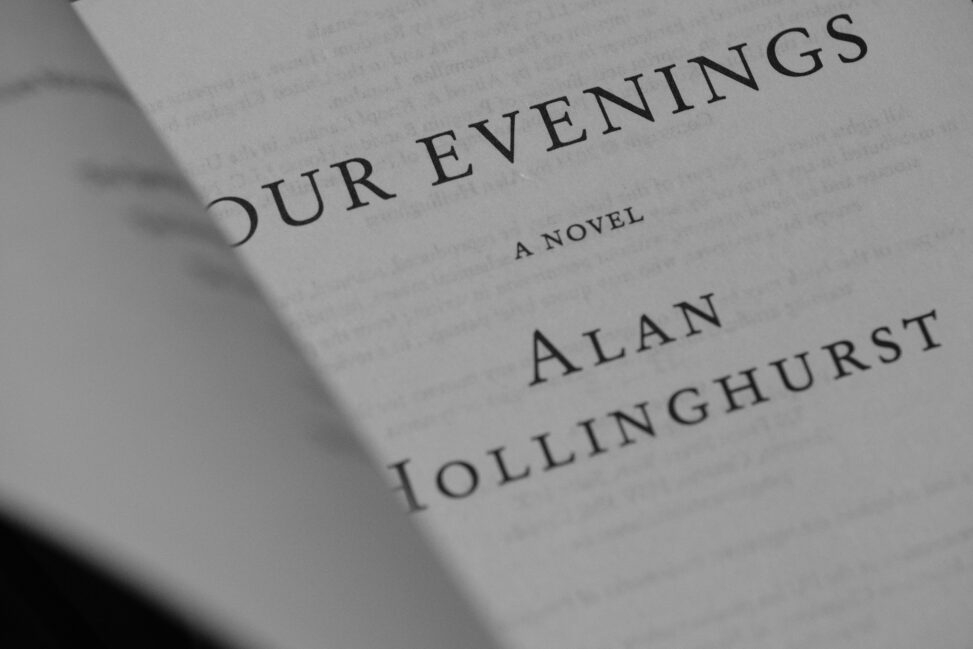
Alan Hollinghurst’s Our Evenings is a book that, though I adore it, I had trouble recommending to a group of friends who saw it in my workbag. Having reviewed products for a decade gives one perspective on what makes a good product or book, and whether it is suitable for a particular audience.
What will make this book a delight to read for both casual and academic readers is the multiple themes and how Mr. Hollinghurst brilliantly does not beat the reader over the head with them. Beyond chronicling the life of a homosexual man who was in the public eye in the UK from the 1950s all the way to 2020, there are two central themes which are finessed throughout the pages.
The first is that the damage and trauma inflicted on victims, no matter how small, has the power to stay with the victim for the entire duration of their life. This initial or series of harms distorts the lens through which the world and its citizens are viewed. The protagonist is a half-Burmese, half-English stage actor named David Win. From the opening pages of Our Evenings, it is apparent that Giles Hadlow is the antagonist, and it is the manner in which his menacing malice hangs over the novel that makes it the obvious masterpiece for many. Throughout Dave’s life, Giles is not always physically present, but his shadow and its consequences reverberate throughout. What makes Giles a fascinating antagonist is not that he’s just a typical bad guy; it is that he represents the distasteful and dark side of many societies. He represents the intolerant, the cruel, and those who simply seek to gain an advantage over others in a zero-sum manner, all the while being intimately tied to those whom they claim to despise.
The second theme of this book, which directly informs how the first plays out, especially in the book’s final pages, is how the tolerant can pave the path for predators to roam and hunt freely. Our Evenings cover 2016, the pivotal year it turned out to be for populism abroad, and Brexit specifically in the UK. The antagonist’s parents are analogous to the generosity of those who built the post-war rule-of-law systems, and their son, Giles, represents those who would come after and tear down all their efforts.
Most viewed Our Evenings as a perfect illustration of modern life in England, but in reality, it speaks to how the greater EU and other liberal democracies have gotten to where they are now. In comparison to China, Russia, Saudi Arabia and other governments whose citizens do not have a say in how their societies are run, liberal democracies have often been called herbivores. Armchair pundits love pointing this out, and supporters of populist movements like to cite reliance on lawmaking and policy as a weakness of liberal democracies. Giles illustrates the consequences of such actors in society, and their impact on the individuals and that of an entire country.
This is where the true brilliance of Mr. Hollinghurst’s work rests, and it is a shame that more people do not notice it. Much in line with Shakespearean tragedies, the tragedy that befell Giles’ parents in bringing into the world exactly what they sought hard to stamp out is truly heartbreaking. While other writers may have put this as the lead, Mr. Hollinghurst allows for the tale to evolve naturally from an outsider’s perspective.
While the tale’s tragedy may go unnoticed by most readers, so would the reasoning behind the book’s biggest weakness. The key issue with Mr. Hollinghurst’s title is the pacing and variance of the quality of the prose, which will delight the literary nerd but will leave the casual reader feeling abandoned for a large portion of the second half of the book. Certain sections of the story, which are significant and provide a determining path for the protagonist, are written in prose that is simply virtuosic. The issue is that these sections are rather front-loaded in the book, and they appear amongst a landscape of sentences which are pedestrian in comparison. To avoid spoiling these moments, one example is when Dave is overlooking an important town for a chapter of his life after an incident of his own making. This staggers the casual reader, breaking the flow of the book, and confuses the academically minded reader who may be taking notes as they read along. These elevated sections come across as being written in later drafts after an editor told the author that the section required revisiting.
This is done on purpose, and it reveals itself at the end of the book. The unfortunate side effect of this is that many readers may put the book aside for good shortly after the second part of the book starts to lose steam. The in-universe reason for this occurring, especially with the topic that is covered in these pages, brings a weight to the book’s third theme, and adds a highly important nuance that once again is easy to overlook. The motif first discussed with regard to the lasting impact that a harmful person can have plays in direct opposition to the third theme, which is that those whom we love the most in our lives give the most vibrant colours to the tapestry of who we are. The nuance revolves around how this love is viewed by others, especially key stakeholders in one’s life, and it is further echoed in Dave’s mother’s romantic endeavours throughout her lifetime.
Our Evenings is a deceptively complex book which will reward the highly engaged reader who never falls into their resting state while reading. This is what gave me pause when my friends asked whether I would recommend this title to them, and it is ultimately what prompted me to write this book review. This book requires a higher level of operation than what most avid readers are willing to devote to their reading. If you are willing to put in the effort and to put up with what may seem like a weakness of the book when it is, in reality, not, requiring you to power through certain sections, you will be rewarded for your endeavour in internalizing this truly great book.
Time of writing: January 30th, 2025