1,559 words
Time of writing: Saturday, October 17th, 2026
Note: This is one of a series of articles focused on the upcoming holiday season. The rest of the suite can be found here when published. This is the first article in the suite.
The leaves start to change, the routes and detours taken to drop off the kids on the way to work cement into routine, and the MLB and WNBA playoffs start to fill our airwaves. During this period, between October and Christmas, every professional and those working in the financial sector are haunted by end-of-year deadlines, reports, earnings and sales quotas, and being subjected to performance reviews, all while being watched by their respective powers that be as if they are prey being circled by a peregrine falcon. Factor in the growing pressures of the rising cost of living and the mandatory spending hikes that come with the holiday season, and this season is not one that many find jolly.
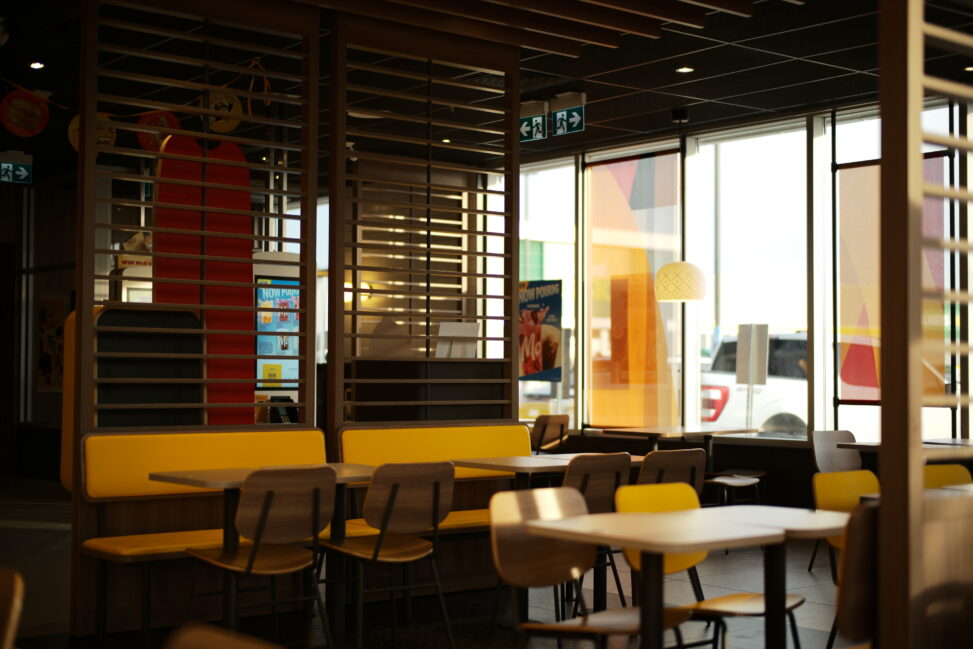
A couple of weeks ago, in order to beat traffic, I headed out of town for a meeting and arrived at the quiet small town an hour and a half early, and settled into a quiet McDonald’s just as the sun was rising. These towns in southwestern Ontario face the same intensity of development as towns with a lucrative lakeshore. Except instead of mansions, posh condos, high-end retirement living buildings, restaurants, and cafes, these towns have an influx of infrastructure and manufacturing plants adjacent to the main highway connecting all the major cities in the province. Not far from where I settled for breakfast, a nursing home was under development, along with several warehouses and factories. All good signs, given the instability of wood, steel, and aluminum prices.
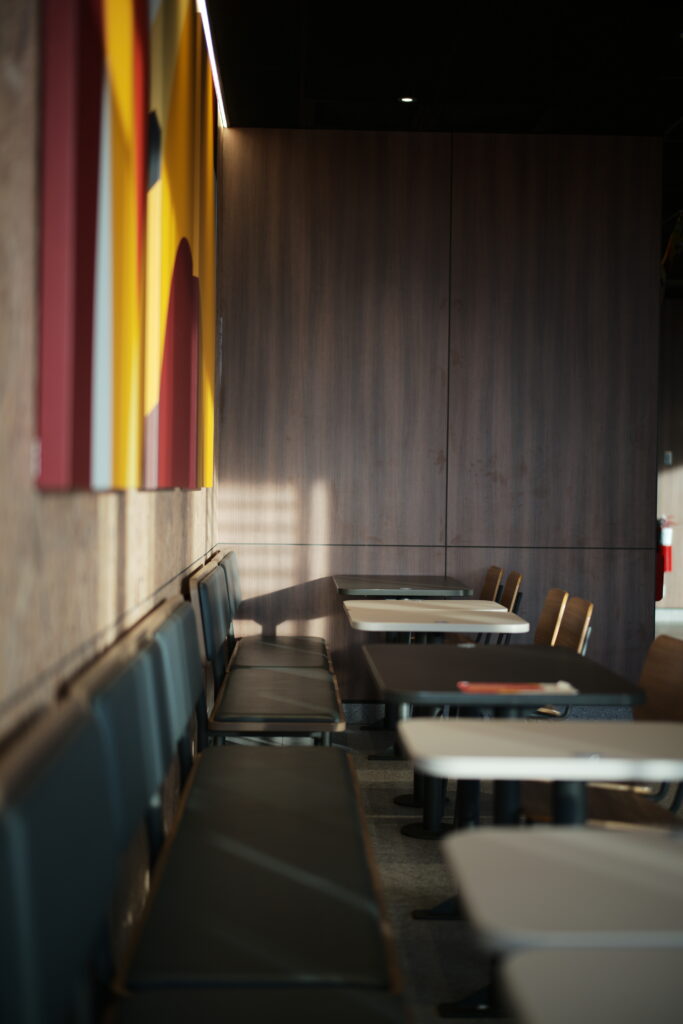
“Can I just stay here and work on my laptop for an hour until my meeting?” I asked the McDonald’s manager as he brought my meal to my table. Yes, in small towns, this level of service is available at a McDonald’s. This was confirmed by the adorable human sitting beside me as she struggled to eat an egg bite, cutting it with the surgical precision of giving a hamster a hysterectomy.
“Absolutely,” he exclaimed warmly.
As the next hour went by, several people came and went into the establishment. Every single one of them was simply exhausted, even though the day had yet to officially start. A near-continuous series of construction workers made their way in, all from the same job sites, not making eye contact with each other. Their body language announced to the faces they’d be forced to see for hours on end, “don’t you even think of talking to me before my fucking hashbrown.” Each one of them would then proceed to sit alone, with their extra-large coffees, and pound two to five hashbrowns alongside their breakfast sandwich of choice as their gaze pierced through their phones and onto their futures without a savings account. Their stays would not last longer than four minutes each. After quickly leaving, the McDonald’s returned to its liminal state, where I sat alone, slowly basking in the rising sun through the thick panelled glass.
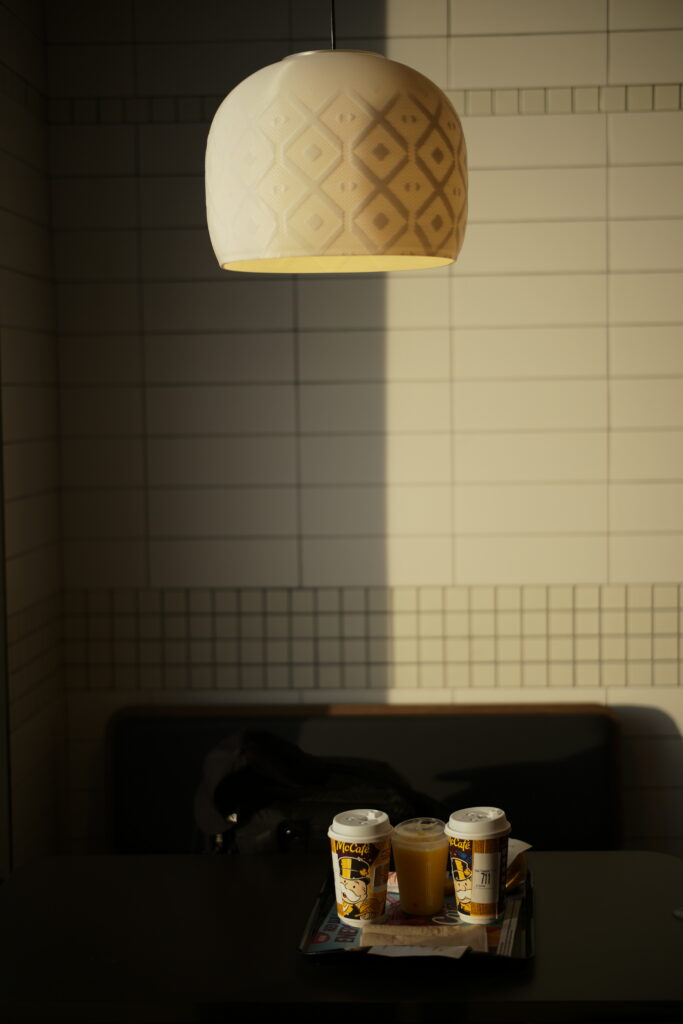
Occasionally, a mother and her child, always a mother, and always one child, would walk in and, unlike the construction workers, decide to order at the kiosk and forgo any human interaction in making their order. Two who were wearing matching plaid coats, as if they were cosplaying and about to reenact the Log Driver’s Waltz, stumbled in, both looking as if they had always had better places to be.
“Mom, if I don’t get breakfast this week, can I put that money towards a Switch 2?” asked the not-so-little boy. “Mom! Are you listening?!?”
Dazed by the sudden intensity of her child, she looked down at her son and said nothing. Both her cheeks tensed as her eyes furrowed and burrowed into his very being with a resounding, shut up and just fucking eat your hashbrown. Concerns about making ends meet followed me throughout the day, as did the exhaustion for what was about to come.
Though these concerns were nothing new, the level of immediate despair and its escalation earlier into the year were new. Such trips are made about once a month, and this weight was distinctly missing from the shoulders of everyone I saw before.
As the holiday season approaches, we are inundated each year with articles and think pieces on the stresses of the merry season. From the pressures of balancing work and family to the inescapable pieces on the dangers of family dinners.
This year, the immediate comparison to exactly when the despised holiday season starts and some key lessons in music theory sprung to mind – as I finished my hashbrown. Just like music theory and key changes, most people address the symptom, not the initial infection, as it quietly changes the musical landscape. Key changes are a necessary feature in musical compositions. They offer the human ear pleasurable transitions from one section of the piece to another. When studying more advanced music theory, one can recognize further allusions being made to what’s to come in the piece as gradations are foreshadowed, intentionally stuttering in place, and playfully leading one’s ear with the composer’s hand firmly guiding the listener. In concerts, you can see smiles on the faces of the musically trained ears as they listen to new compositions with unsaid “bravos,” as the new work effectively progresses across its newly laid landscapes.
Across the G7, we generally have a common set of windows to the annual calendar. These are typically characterized by holidays, but more by quarters as financial, academic, and personal milestones are reached. While the beginning of autumn is typically characterized by the onslaught of the oncoming holiday season, what is more important is the beginning of the academic school year and the pressures placed on households. Once the kids go back to school, it becomes a race to the finish.
If you want to address and handle your end-of-year burnout before having to sit across from family members during holiday dinners, self-care and management of finances and all facets of life must begin in late August. Most readers who are single and live alone think this may not apply to them, but none of us live in a vacuum; when our neighbours, coworkers, and those we share the road with come under increased strain, so do we.
Even those of us who are without children feel this pressure as every work environment ramps up. Noticing the possibility of burnout this year, I decided to plan a vacation in the autumn. Sadly, this vacation was cut short after only two days due to a family matter back home, but it was well worth it. I knew that this was a possibility due to the oncoming RSV season and the many other health complications that ail elders in the fall.

Escaping the familiar trappings of the metropolis, I drove a couple of hours towards a rural county that is pretty much a giant island in the middle of Lake Ontario. The stay itself was extremely underwhelming as the welcoming liberal signs on storefronts eroded as soon as one left the town’s main streets and was greeted with anti-government flags and intense stares of deep suspicion.
The real value came when I suddenly had to drive back home into the wall of traffic, and I realized just how beautiful Toronto and its people were. The city’s green spaces proved more beautiful and purposeful than the provincial parks I visited. Also, the people of Toronto seemed more genuine and kind than those who either saw me as a walking wallet or an alien who only shared a provincial licence plate on his equally foreign German car.
During my trip, I didn’t feel refreshed, as the veneer of pressure on rural Canada overshadowed any other narrative presented to me. After handling the family matter, though, I returned home with a refreshed perspective and appreciation for my environment and situation. The break from the end-of-year rush and the playoff atmosphere in all aspects of life was oddly just what I needed.
The lesson I took from this stillborn trip was to make time off count and to make room for it. I learned to prioritize a change in scenery if and whenever possible – to make it a priority just as I would for a loved one’s emergency call from three hundred kilometres away.
In sports, the playoffs offer great entertainment because the year’s strain boils down to a few high-pressure games. Life is not meant to be entertaining. The best thing you can do to prepare for the playoff season of life is manufacture breaks and opportunities to upgrade your perspective on life. Routines and a lack of variety in one’s setting can easily lead to a staid and out-of-touch mindset.
Lastly, if you can, do this for those close to you, too. Over the last couple of weeks, I have observed friends dive into deep funks and driving them to an environment that counters their normal life has proven greatly helpful. Whether it is taking a friend to a fast-food restaurant they only frequented as a child, to a mall where they can roam at their own pace, or to a local botanical garden that offers a level of calm they don’t otherwise have.
As long as you can breathe and are physically and cognitively able, you can do this for yourself and those you call friends and family. Doing so is possibly the best Christmas gift you can give anyone, including yourself.