2,853 words
Time of writing: Friday, September 4th, 2026
The traditional short-form review of this timepiece can be found here.
As the summer of 2026 draws to a close, a certain timepiece has proven its relevance, for me, and has highlighted the global political climate, and that of our very nature. In this article we will be exploring how the NOMOS Tetra embodies how humans perceive and react to change as the German region of Saxony-Anhalt takes place in a couple of days. Afterall, a clear differentiator between those whom we would want as a neighbour, friend, or chosen family are those who react to change with equanimity, not ferity.
Rising out of Glashütte, in East Germany, in 1990 as Germany started getting its grasp over reunification and basing your company’s philosophy around the teachings and tenets of the Bauhaus design school, Roland Schwertner’s then new brand NOMOS could not help but be a reflection on modern German history and that of our civilization after the industrial era.
To trace the significance and what the design of the Tetra represents, one could conceivably go back to Germany in the baroque era, but for the purposes of this review, we will go back to the first world war.
The first world war brought a new level of horror and devastation, and those who survived it laid forth a path for a world that would become unrecognizable to those at the turn of the twentieth century. The world of literature was forever changed by the experiences of John Ronald Reuel Tolkien, as his time as a signal officer in France forged the themes behind consumption and evil as embodied by Morgoth and Sauron in the Lord of the Rings. Walter Gropius, already a trained architect, would be so impacted by the war’s atrocities that he would go on to found a design school dedicated towards progress, creation, and not destruction. Interestingly, Gropius would end his service as a lieutenant also in the signal corps.
What makes the efforts of Walter Gropius relevant to this conversation was what his school came to represent, and how it came to be attacked by the Nazi party, and then again nearly a century later by the far-right political party, the Alternative for Germany (AfD). Throughout history, academic institutions and artists had always become an early target for fascist and authoritarian regimes. As the head of today’s Bauhaus Dessau Foundation, Barbara Steimar, pointed out on several occasions, “a party that has understood that culture is the most important political field of all: the one that helps you seize power without exerting force.” Mrs. Steimar and several other cultural institutions are now shoring up legal support in case the AfD wins the majority in the upcoming election for the Saxony-Anhalt region.
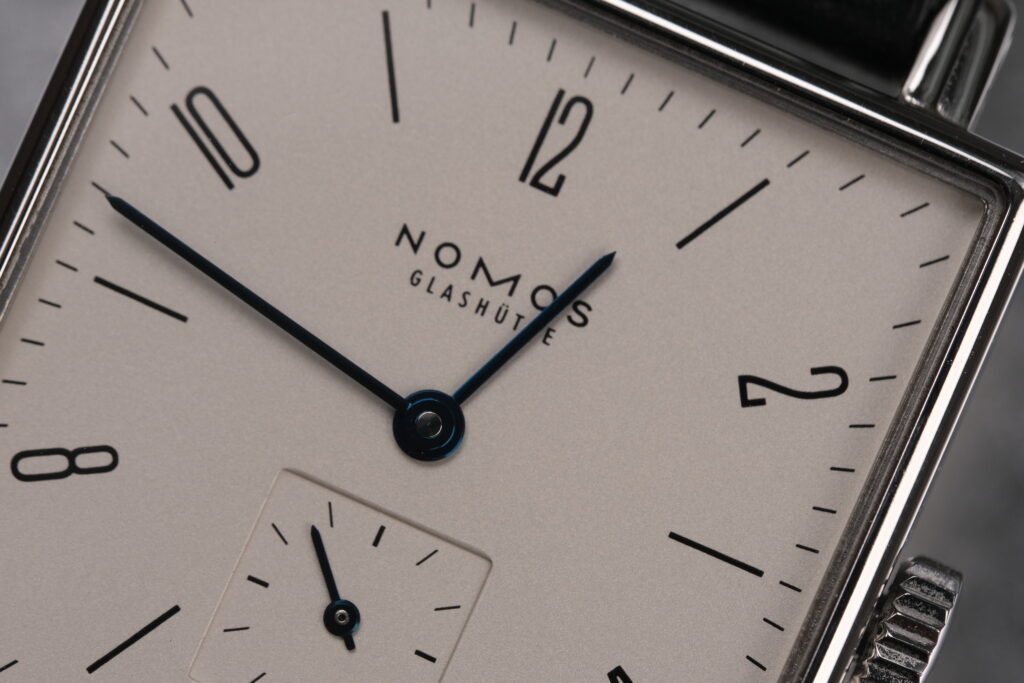
The conditions in Saxony have long become ripe for a political upheaval. Decades of miscontent lead by a failure of reaping the benefits of reunification as the region experienced a very real brain drain as the area’s best and brightest left for better prospects in the former West Germany. This has caused years of stagnation, a shrinking and aging population, and one which has no real easy targets to blame for their malaise. Just as the United States swung towards the current administration after decades of job losses, lack of manufacturing and resource driven industries, Germany’s swing to the right after Angela Merkle and her liberal policies are also mirrored by that in the States after the two Obama terms. Now in America, academic institutions, broadcasters, and all cultural institutions are under attack from the political party that at its core preached a lack of government intervention. Mrs. Steimar is fearing the same for her institution, and she has direct historical precedence for this happening, along with recent direct threats.
In 1919 when Gropius started the Bauhaus school, he brought in teachers from all disciplines in a reaction to expressionism and the war, to focus all of the efforts in the fields having a direct benefit for society. A building designed by an architect had to not only serve a function, but better society through its use and dialogue with the population. As instructors such as Paul Klee, Vassily Kandinsky, Marcel Breuer, Laslow Moholy-Nagy and Oscar Schlemmer were put into place, students came in waves to sign up at the school. Various theories and schools of thought were introduced, such as the staple that form should follow function, to the overly simplified colour theory which attaches primary colours with shapes, and thus giving them different drives. The campus soon became a hotbed for exploration for the students. This did not go well for the conservative population in Weimar, and the school had to move to Dessau in 1926. German society was in a state of flux, and the national identity was a sore subject. Seeing young students having fun and exploring arts freely upset many and it was time to leave for the smaller more progressive city.
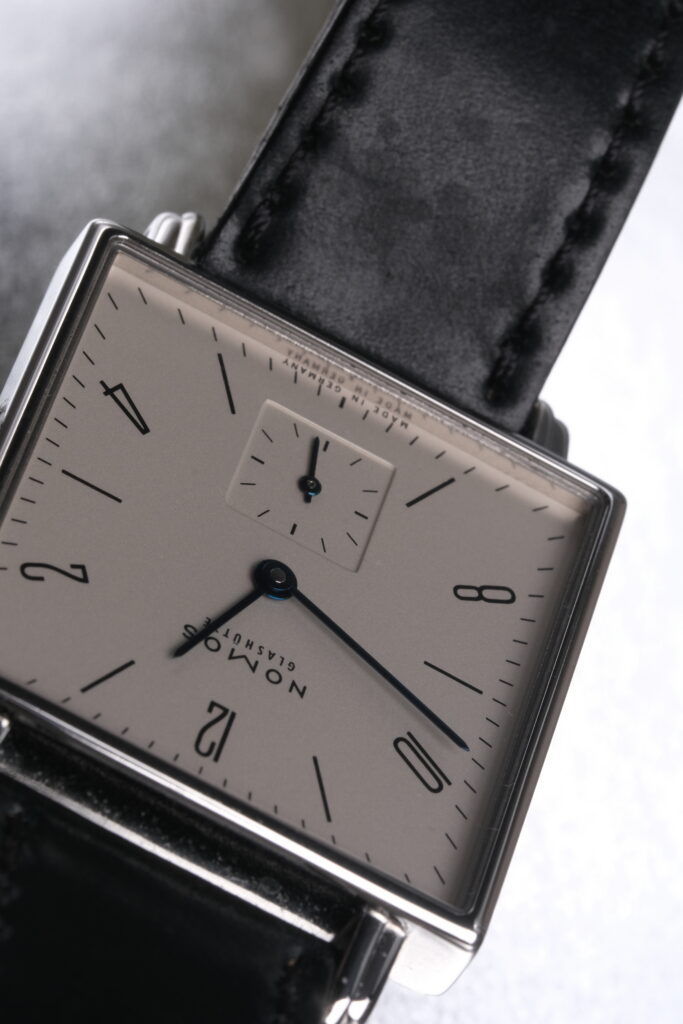
Unfortunately, the borders of Dessau could not protect the school. The 1928 financial crisis and the institute’s new head of architecture, Hanne Meyer, public left-leaning politics made the institute an easy target. Conservatives, and eventually the Nazi party claimed that the Bauhaus teachings and designs were “internationalist” and threatened German culture.
A hundred years on, and the AfD is making similar threats, attempting to change the region’s Bauhaus derived motto of “Think Modern” to “Think German.” The irony of this being that the Bauhaus movement and philosophies are very distinctly German, and can be seen as a great exporter from the region, not an invading ideology. Ulrich Siegmund, current co-head of the AfD, had promised to take down “liberal” institutions while going after “illegal” migrants if put into power. Far-right parties, world over, take advantage of discontent in a region by promising them a return to a fictional past that their electorate did not live through. Just as in the States with their “America First” campaigns, and the failed Conservative “Canada First” campaigns, telling the electorate that they are inherently better than everyone else, and that other people are the problem, is incredibly enticing. This is especially true for a population that is aging, poorly literate, and has poor productivity. The analogs between American’s Bible Belt, Slovakia, Poland Hungary, and Saxony-Anhalt and a lot of former East German areas are strong, as is surge of support for far-right politics which looks to take away rights from others as opposed to raising the quality of life for everyone.
As a result, even with more than an ocean apart from Germany here in Canada, whenever I look down at my NOMOS Tetra, I do immediately “Think Modern,” and these are the reasons why.
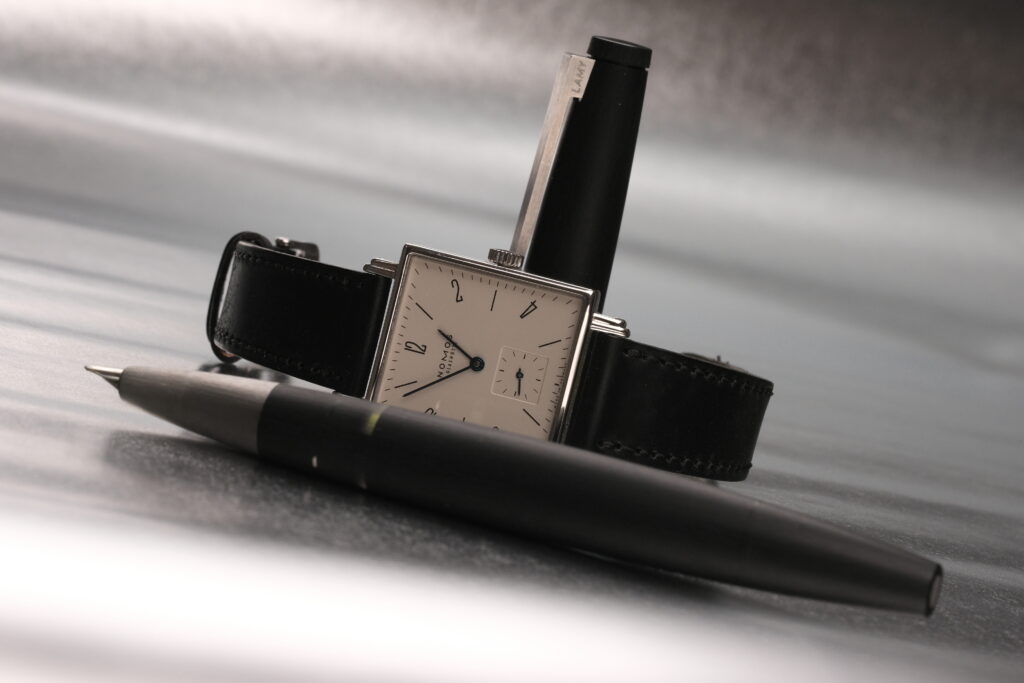
First, one of the major foundations behind Bauhaus and why it continues to resonate and drive artists and architects to continue to innovate is the principle of ending up with less by putting in more, and to never stagnate. Parallels can be seen between the Tetra and the Lamy 2000 fountain pen. Given their respective fields and budgets, both utilize minimal design. The Tetra with its perfectly square case. The 2000 with its streamlined torpedo shape which leans into its hooded nib. The Lamy also espouses the Bauhaus drive to use materials in innovative ways, by using makrolon for the body. This lightweight and sturdy polycarbonate plastic allows for the 2000 to be one of the few fountain pens that people can carry without fear of it breaking. It also allows for an ink window and for all of the seams, such as for the piston mechanism, to be literally seamless. Something which is lost on the more expensive steel version which dispenses with the Bauhaus approach for a more material deemed more luxurious.
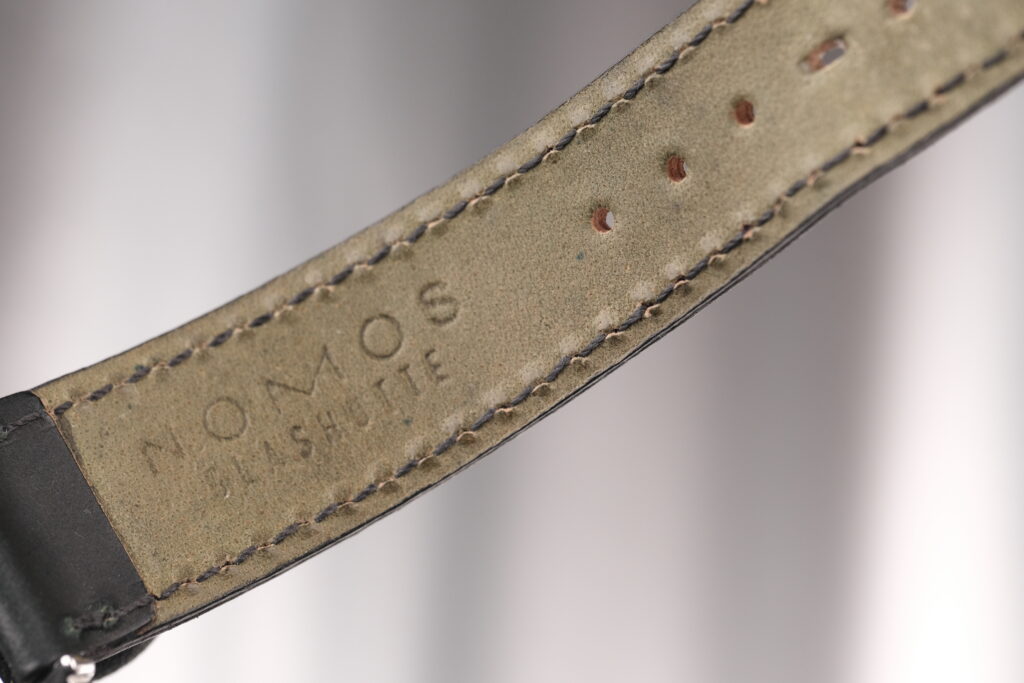
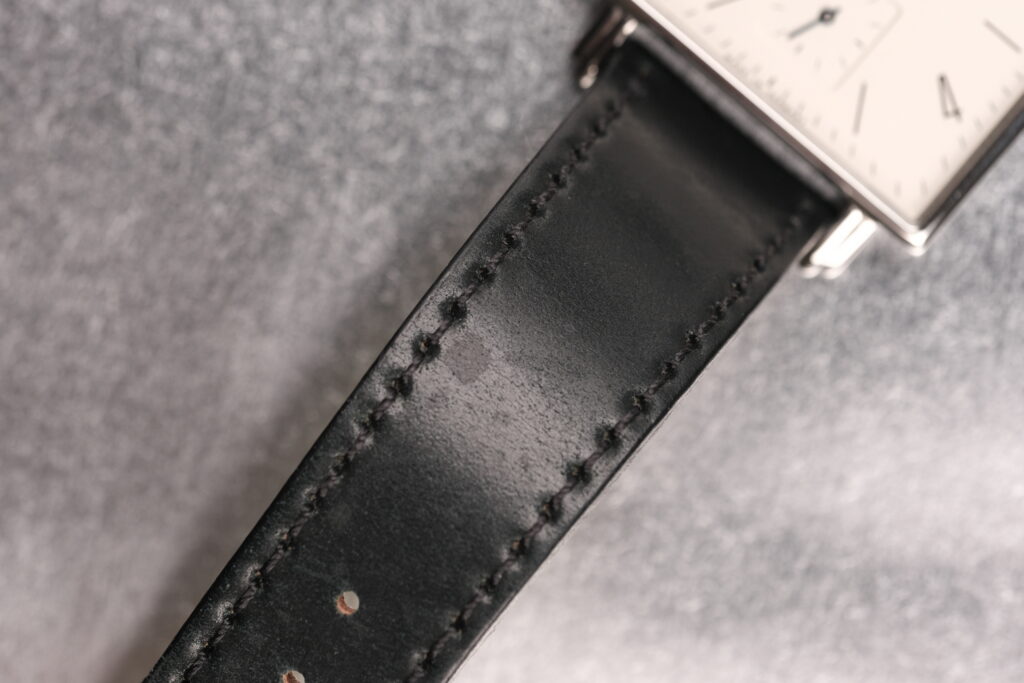
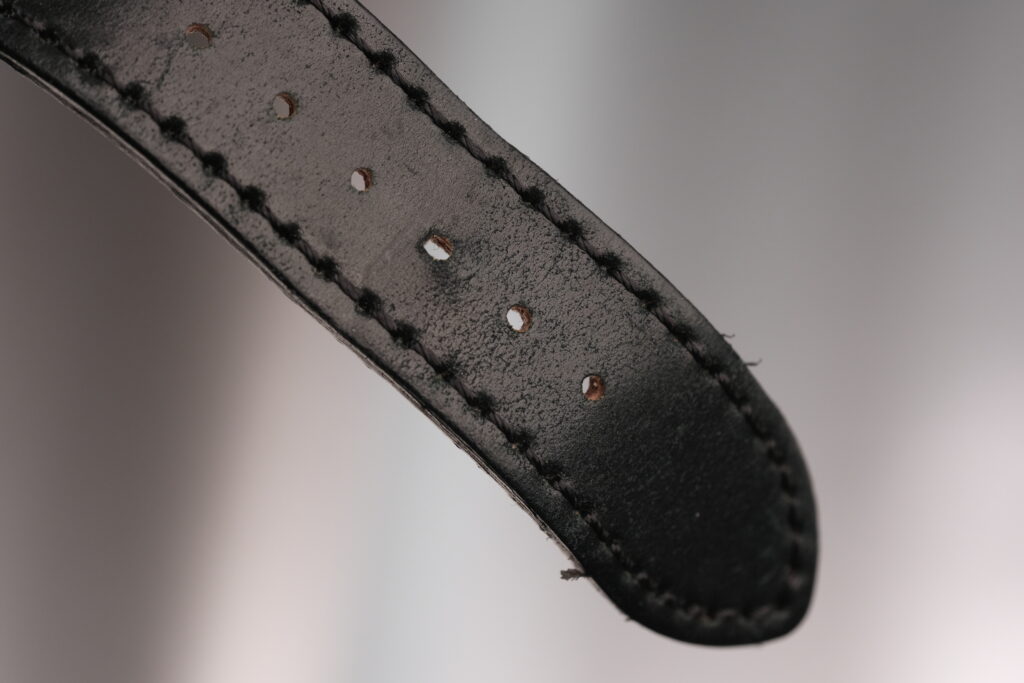
The Tetra focuses on the strap when it comes to materials. The use of Shell Cordovan is deliberate for it patinas over time. Unlike most leathers which just deteriorate, the oils used in the process of making these surprisingly tough straps, start gaining character lines. When new, these straps look stunning and it would be easy for an owner to quickly become disappointed as the sine begins to fade. For new owners of any NOMOS with a Shell Cordovan strap, I implore you to stick with the strap. Keep wearing it and over time the shiny new look will fade, and it will be replaced with a gorgeous warmth that is impossible to replicate on another watch. The patterns and lines on the strap become unique to you, and honestly, you will be the only one to notice as well. Priced at around $170, they are overpriced, but you do ultimately get what you pay for. The keepers on the strap have remained just as structurally strong as they were upon arrival, and there has been minimal deterioration in just under a year of reasonable wear.
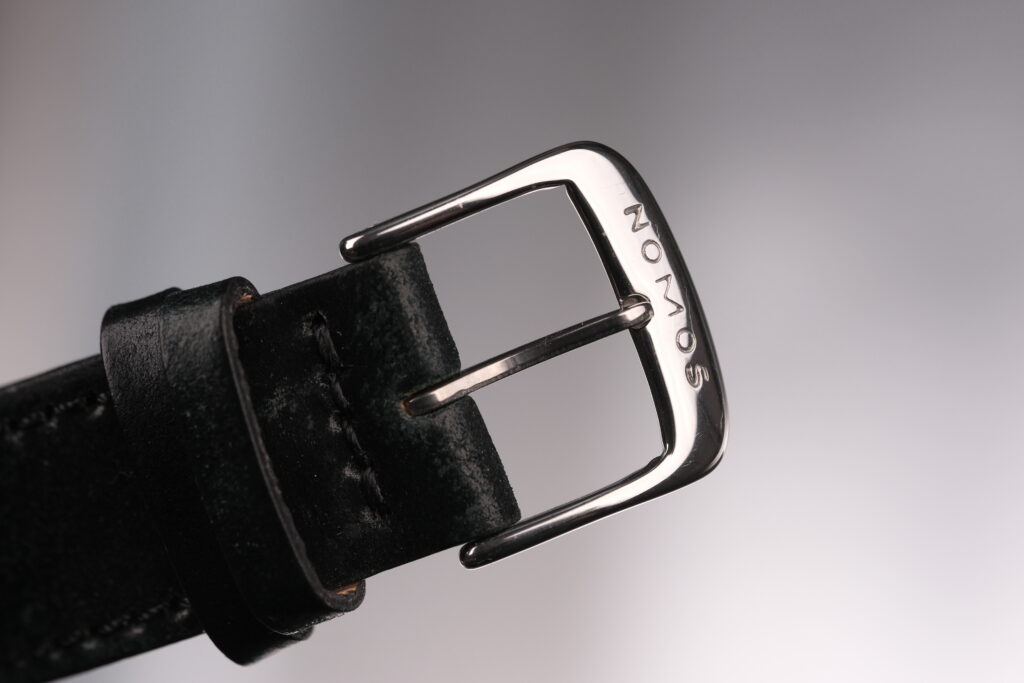
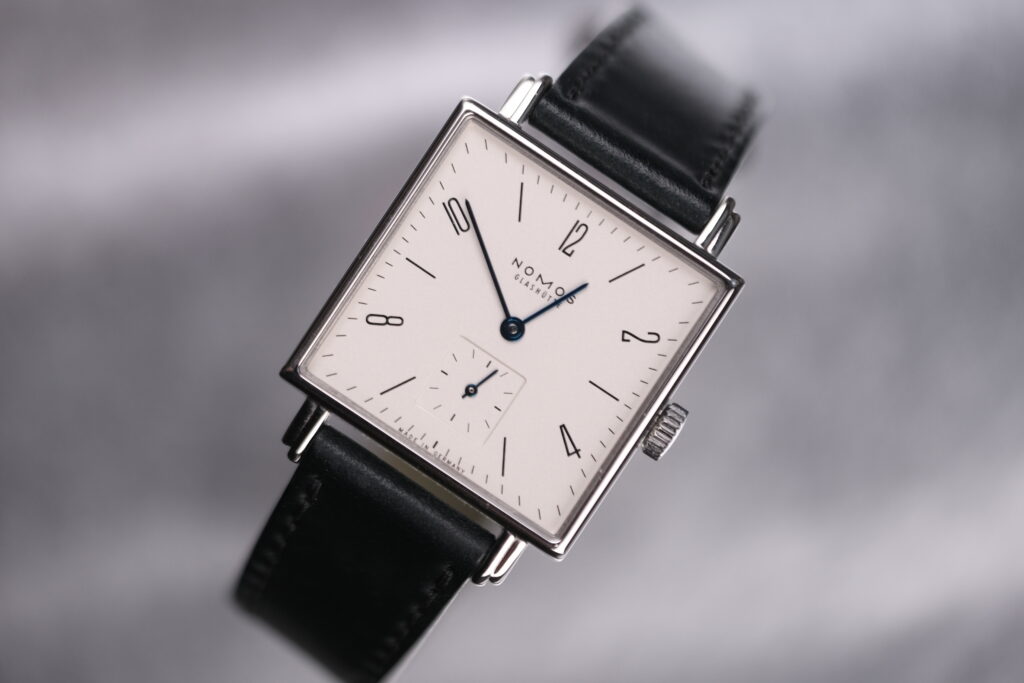
Doing more with less has the natural side effect of making a watch more legible as the Tetra uses a Bauhaus-derived typeface which had been in use by many others in the past decade. When the Berlin Wall fell, hordes of West Germans went to the formerly occupied East and looked on at dismay as the beloved Bauhaus fonts from the 1920s on buildings were vandalised by the Russian occupying force. Beyond the structures which were not easy to remove, these distinctly Bauhaus typefaces were targeted for they represented the German identity. You can draw your own thoughts about the irony of the AfD now wishing to do the same and bringing into question which Germany are they interested in reviving. The Germany which the rest of the world admires, or the Germany that for a relatively brief period was the source of our terrors abroad. Never once in the last year of owning this watch, did I have trouble telling the exact time. Even the sub-seconds hand and dial helped in administering precise treatments recently.
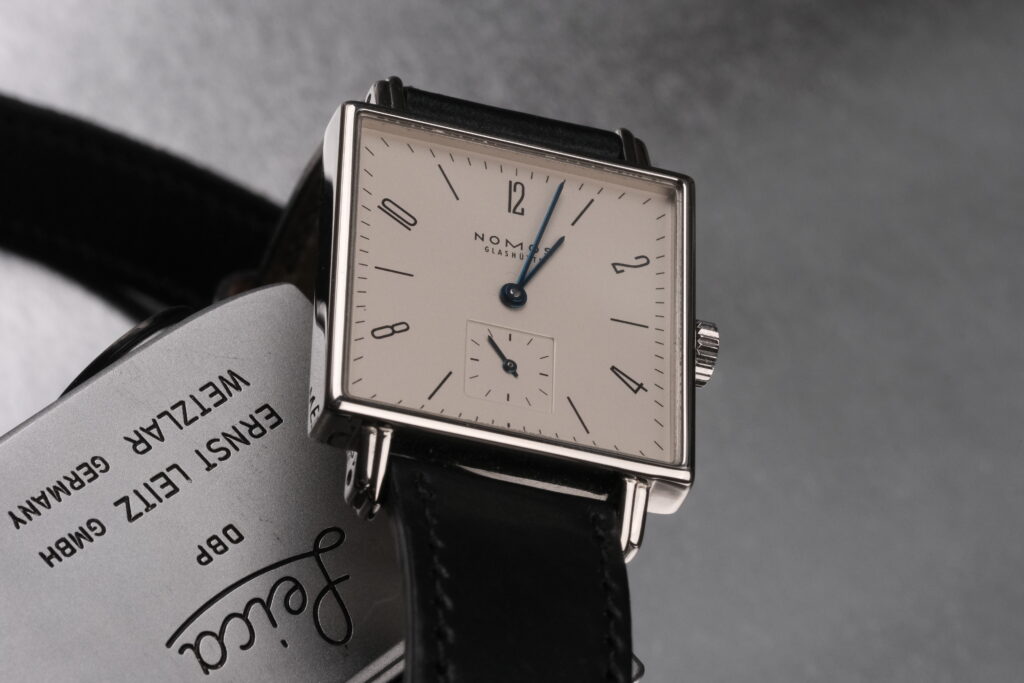
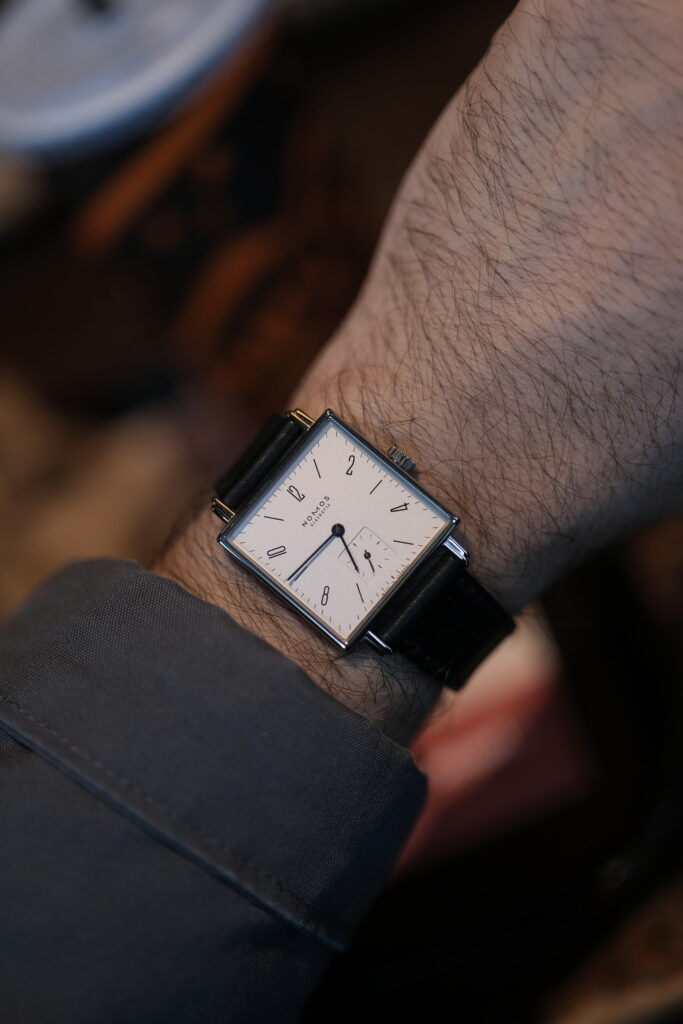
This slim condensed and vertically stretched typeface gives off a very formal yet alert stance. Here in Canada, about a half dozen strangers commented on the Tetra looking like a doctor’s watch. Granted, we were in medical facilities at the time, but the stark silver dial and the straightforward yet characterful font simply gave the watch a staggeringly no-nonsense stance. When coupled with the tight Shell Cordovan strap, this timepiece has zero room for sloppiness and comes off as bespoke and tailored.
When NOMOS launched, they did so with the Tangente and then the Ludwig, Orion and of course the Tetra. As a new company with limited resources, these silver dials were used across all models. In time, NOMOS would release colourful dial variants, better aligning with the overall Bauhaus motifs of using vibrant colours for dynamism and to have a direct conversation with the environment.
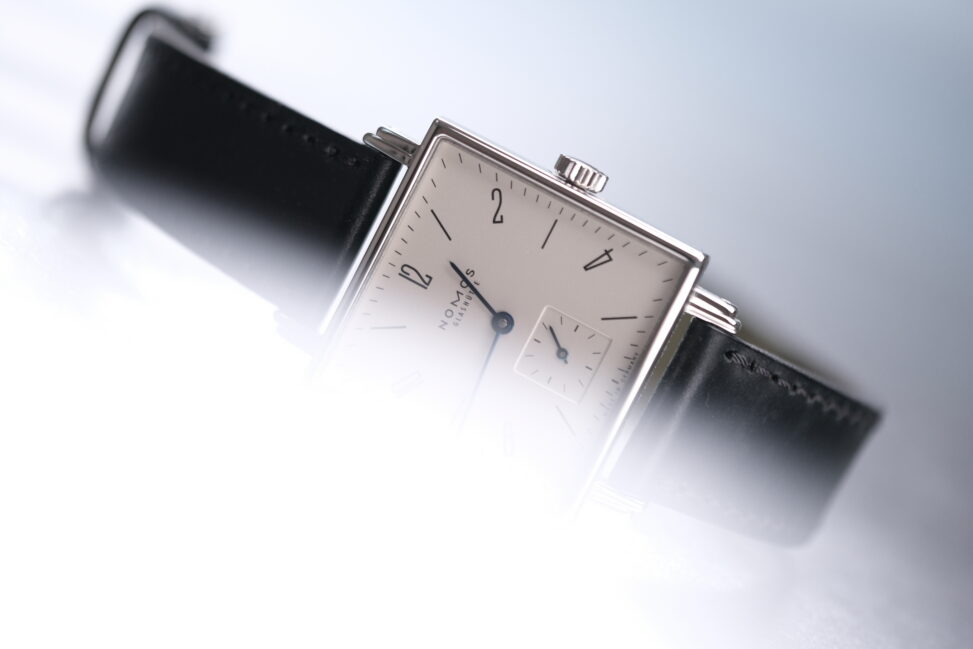
My Tetra, unlike most of my other watches, did have a very direct conversation with others. Its diminutive 29.5mm square case is leveraged with strong twin lugs that call to mind Art Deco designs. Many designers who pioneered Art Deco designs in the United States were from the Bauhaus school, including Walter Gropius who like many of his peers fled Nazi Germany for the shores of America. As the months pass, the owner of a Tetra will begin to appreciate just how much visual weight these lugs are lifting. Many of the Art Deco buildings that come to mind instil a sense of brutal strength that is not unadorned like Brutalist designs. Many describe these lugs as “architectural” and there is good reason for this.
All of this comes together with the blued hands which achieve their function, but with grace and beauty. The centre cap used for the hour and minutes hand acts as a visual anchor for the right-angled landscape. This brings to mind the only design feature of the entire watch which could be improved. If the small seconds hand would also use a closed cap, this would bring more cohesion across the watch, but it would also draw one’s eyes away from the anchoring nature of the main cap used for where the hour and minutes hand meet. The watch is perfect as it is, and looking for improvements, as we’ve just seen, will in reality detract from the design’s overall strength.
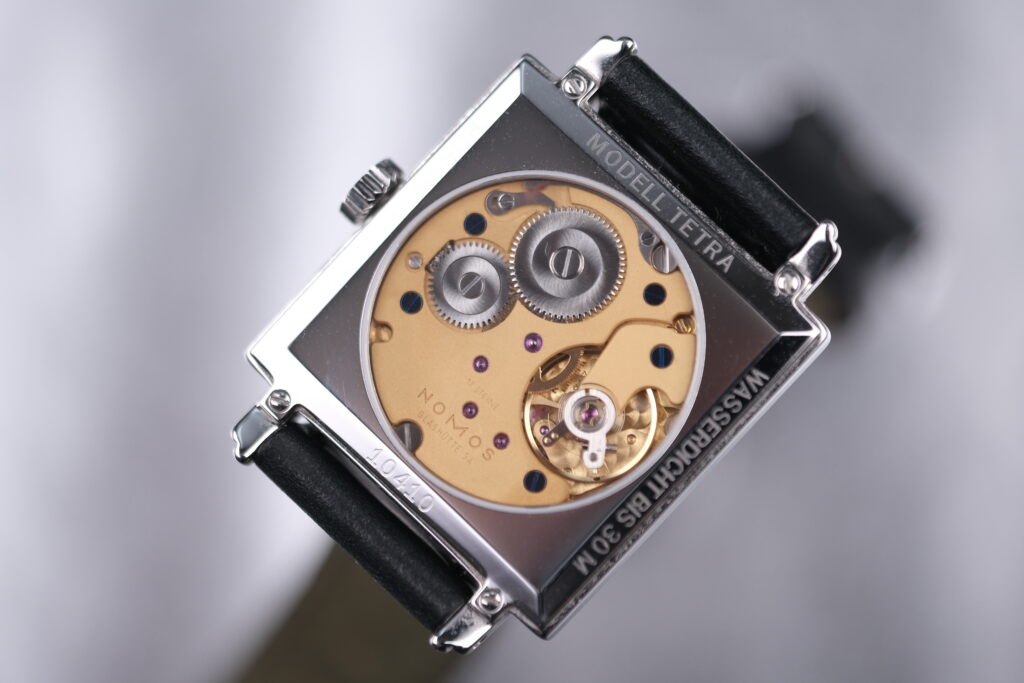
When it came to movement used in their watches, there was only so much of the Bauhaus tradition that could be drawn upon. In terms of form following function, first, a mechanical watch needs to be easy to service. Second, the watch needs to be consistent. The movement seen here is based on the Peseux 7001. This movement is used in watchmaking schools and in my experience is not only extremely consistent, but can be worn for many years before needing a service. Both of my Peseux 7001 based watches from NOMOS are exactly ten seconds fast a day. This allows the operator to be on time every day and not have to frequently check a reference time. Besides finishing, screws, a different balance cock, a Triovis regulation system, Nivarox hairspring, Incablock shock protection, and hacking seconds, NOMOS did lean on one method that is known as a cornerstone of German watchmaking – the three-quarter plate. Just like Bruno Sacco era Merecedes-Benzes, or Leica cameras, German engineering is at its best when over-engineered. The three-quarter plate is installed and used for greater strength and rigidity. In the case of NOMOS movements, it also gives them their distinctive German visual language, if one is fortunate enough to have a view of the movement. This movement would be named the 1T in 2002 before being referred to as the fully in-house Alpha movement after all of the substantial upgrades and modifications were applied.
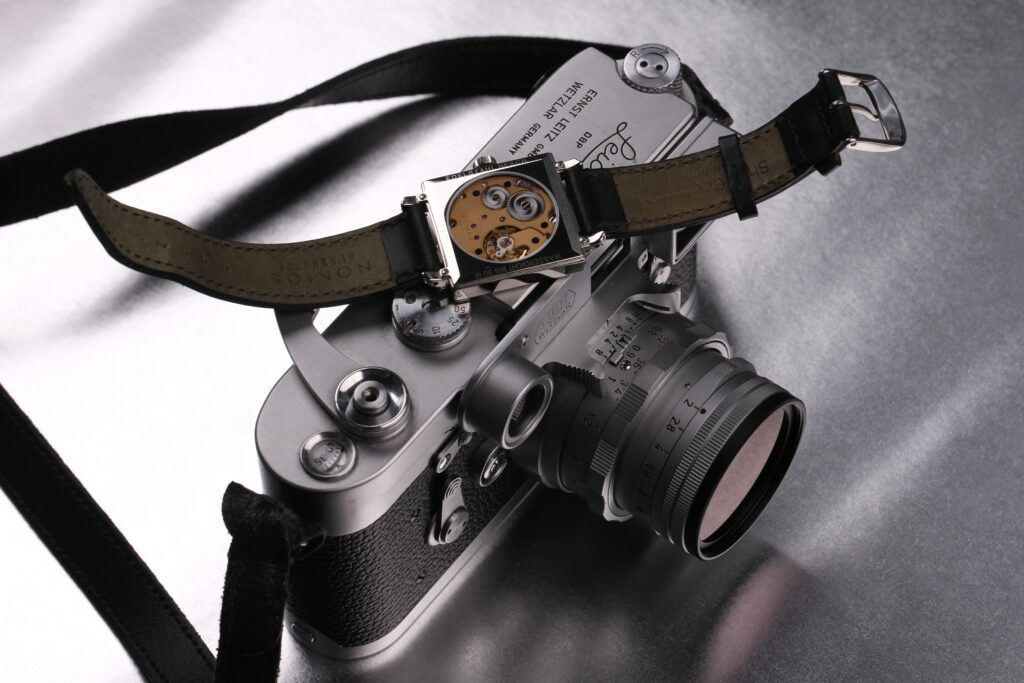
The 23.3mm movement could easily fit in watches ranging from 27mm to 40mm and not look ungainly if viewed through a sapphire caseback. The 2.5mm thickness also meant that it was perfect for the dress watch applications for all of the initial NOMOS models. Its Swiss Lever Escapement beats away at a calming 21,600 vibrations per hour while delivering a very useful 45-hour (by my testing with two watches over a year) power reserve. Besides being magnetized, these NOMOS movements are perfect for everyday use and have absolutely no downsides. The greatest strength of the Peseux 7001, this pre- Alpha and the Alpha movement itself is how easy they are to service. Mechanical watches truly start becoming yours once you service it and you start to realize that the same watch has been on your wrist for more than a decade. If a watch is difficult to service, or needs parts which are hard to find, one’s beloved mechanical timepiece can easily become disposable.
Many watch brands try their best to tie in a historical significance with their watches. Rolex, Omega, Tudor, Blancpain and countless other brands spend billions of dollars in marketing to try to convince customers that their products are important and can be directly tied to important moments in history or a time when we explored the world with these watches as tools. NOMOS does not have to do this. Every single one of their watches proudly displays the forward progression of Germany that was once knee-capped by the second world war and the Russian occupation, only to regain its footing and to become one of the brightest beacons in the developed modern world.
To wear a NOMOS is to announce your sensibilities and values for democracy, progress, and growth. When I wear either one of my NOMOS watches, I am reminded of the regions of the world have been in where these virtues were greeted with violence, hatred, suspicion, and fear. Many people like this brand because the people who work there and their marketing materials are personable. Having seen anti-democratic regimes firsthand, I love my NOMOS watches because they stand for the rights of everyone in the world. These are not normal watches that were bought by conglomerates time and again. This is a brand which was born out of the ashes of a forcefully separated and wounded nation, which would go on to try and heal and better itself. Many across the globe look at these efforts in themselves as valiant as no country or culture is perfect.
As this weekend approaches, my eyes will be facing towards Saxony as they undergo an important election that is unfortunately being undermined by a significant population that has been experiencing an acute crisis of relevance. In the last federal election in Canada we faced similar movements from rural areas and specific regions where far-right politics promised a nostalgic offering while being incredibly short on details. This is a threat that we Canadians know well, never mind the hole our neighbours to the south of us have dug themselves into.
So, if you are in the market for a NOMOS watch in the near future, know that there is a lot more meaning behind their use of materials and design decisions. The history which NOMOS is drawing from is not a distant romantic version of reality, it is living that history now in real time, and I cannot think of a more powerful reason to support and wear a specific watch.
Nomos Tetra 406.9 Specifications
Case width: 29.5mm
Lug to lug distance: 40mm
Strap: 18mm Horween Shell Cordovan
Thickness: 6mm
Crown size: 5mm
Crystal: Sapphire
Dial: Galvanized and white silver plated
Water Resistance: 30 metres